
Alufix: an online store on Medusa.js with a complete purchase path.
We designed and built a store on Medusa.js with a custom Next.js storefront. A catalog of seven brands, product variants, a cart and a checkout for consumers and companies were built as one product, from the first screen to order completion.
Figures come from the public store as of 7 October 2026. We do not publish sales results, because we did not measure them.
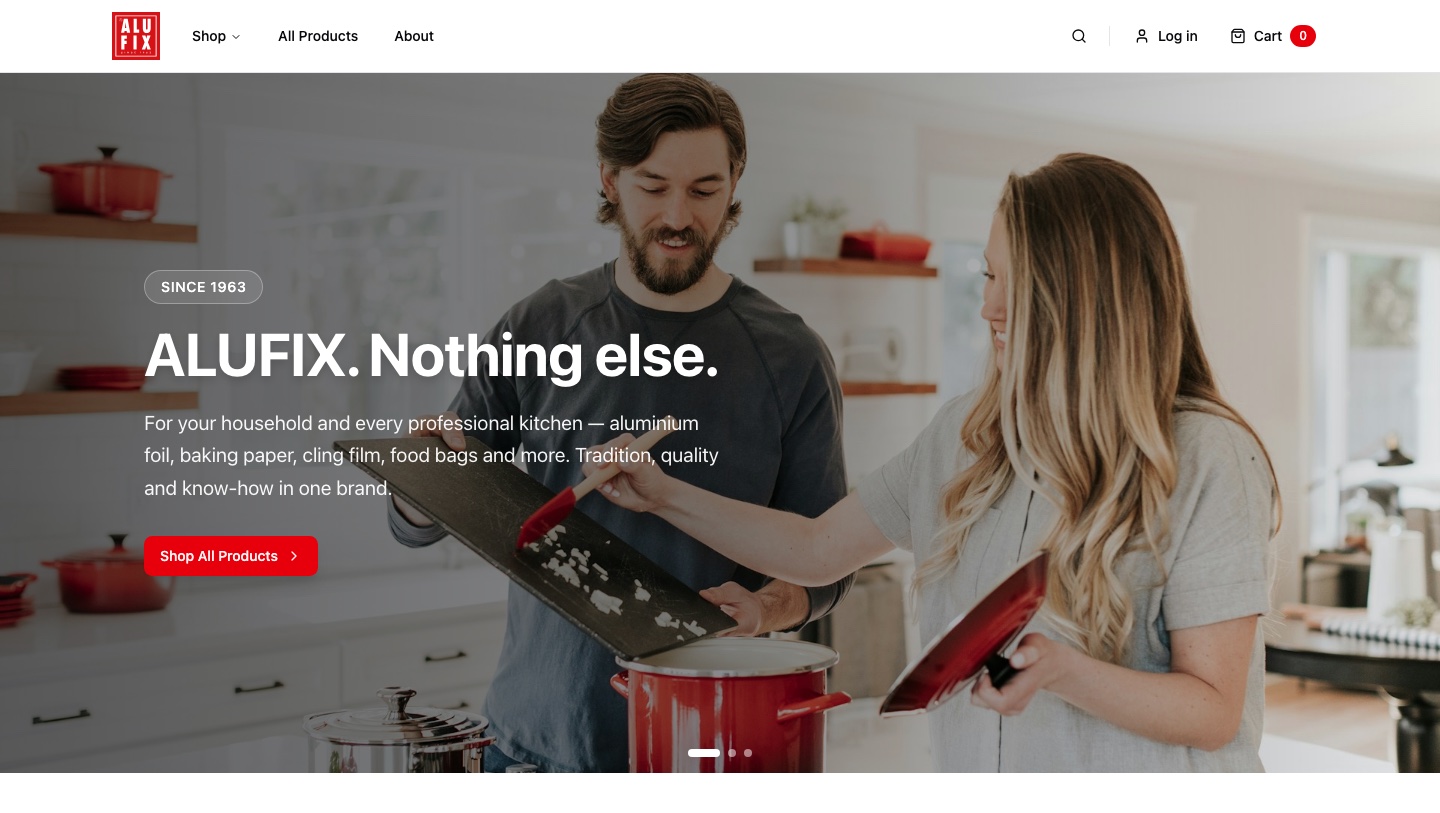
Seven brands, one store and a buyer shopping for home or for a business.
Starting point
ALUFIX is a brand of aluminium foil, baking paper and cleaning products that has been on the market since 1963. The alufix.pl store sells its products directly to customers, and next to ALU-FIX the catalog carries Comforte, VORTEX, GoWipes, Pro Service, Novita and Superfresh.
In a store for everyday products, a cart is made of many small items. How easy it is to buy depends on how fast a customer finds a product, picks a variant and moves on to the order.
So the store could not be a set of separate screens. The catalog, the cart and the checkout had to share the same data and the same rules.
85 products in 20 categories and filters that do not lose the customer.
Catalog
The catalog has a category tree with subcategories, collections and brands. A customer ticks a category, sees its subcategories and the number of matching products, and can sort the list.
Selected filters go into the page address. A narrowed list can be shared or reopened without clicking through from the start.
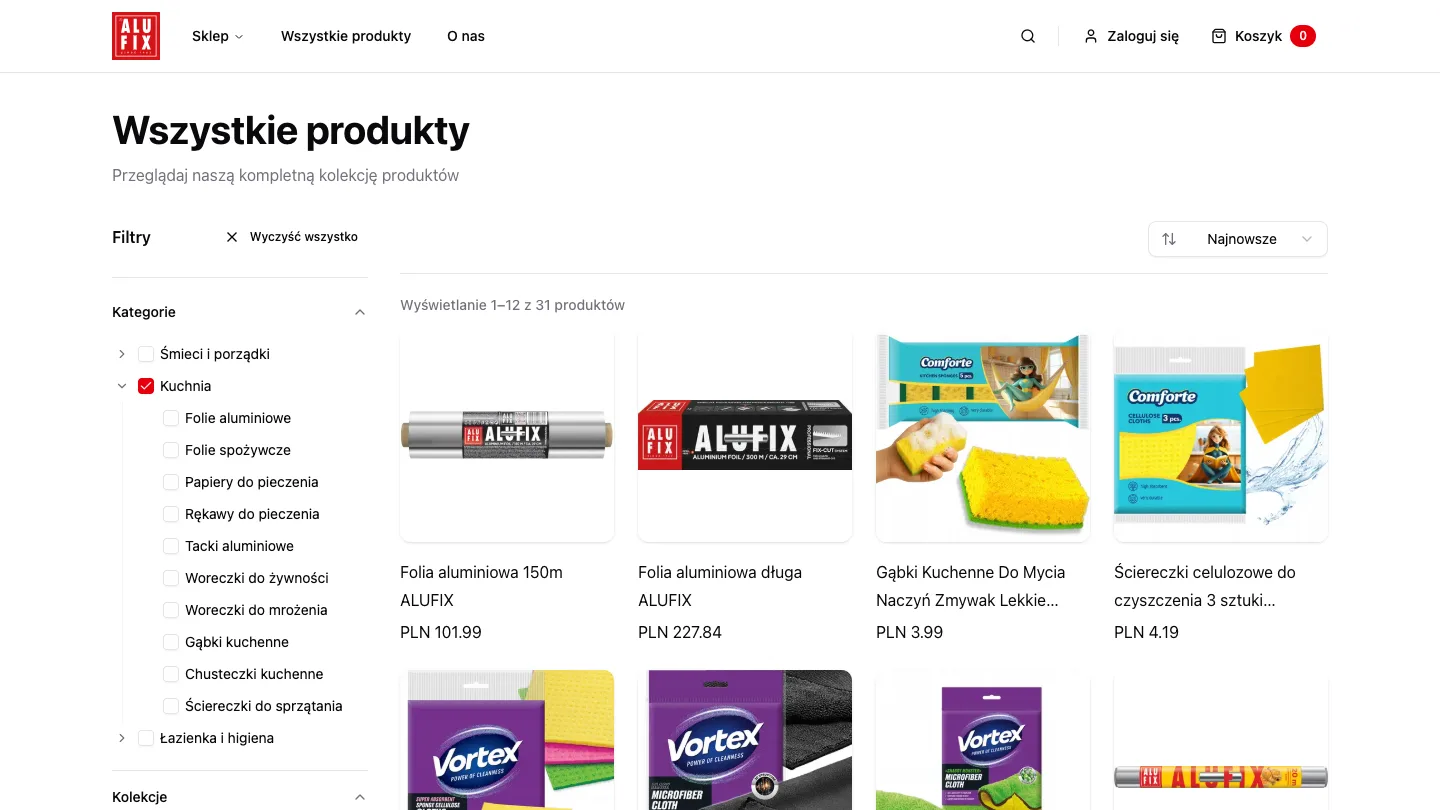
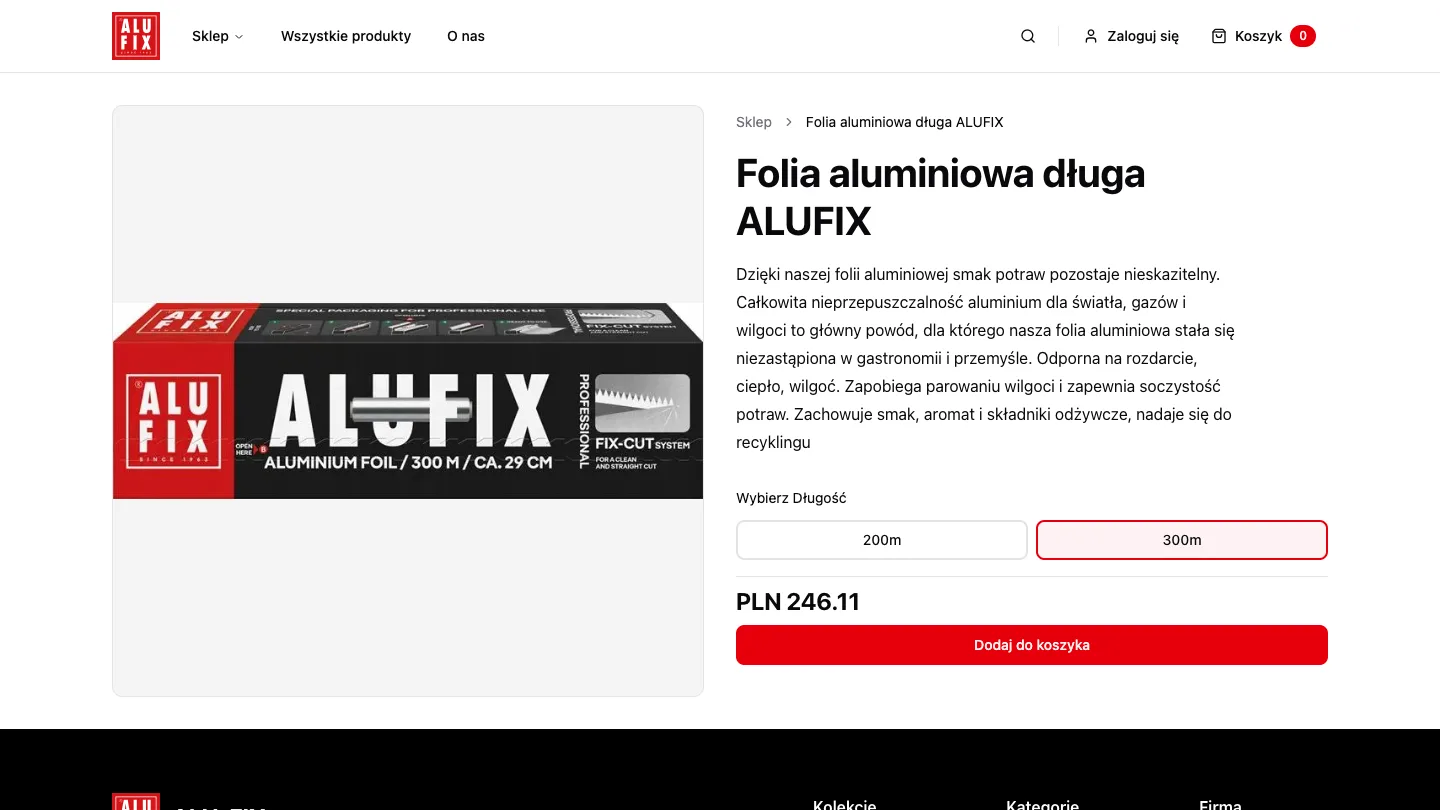
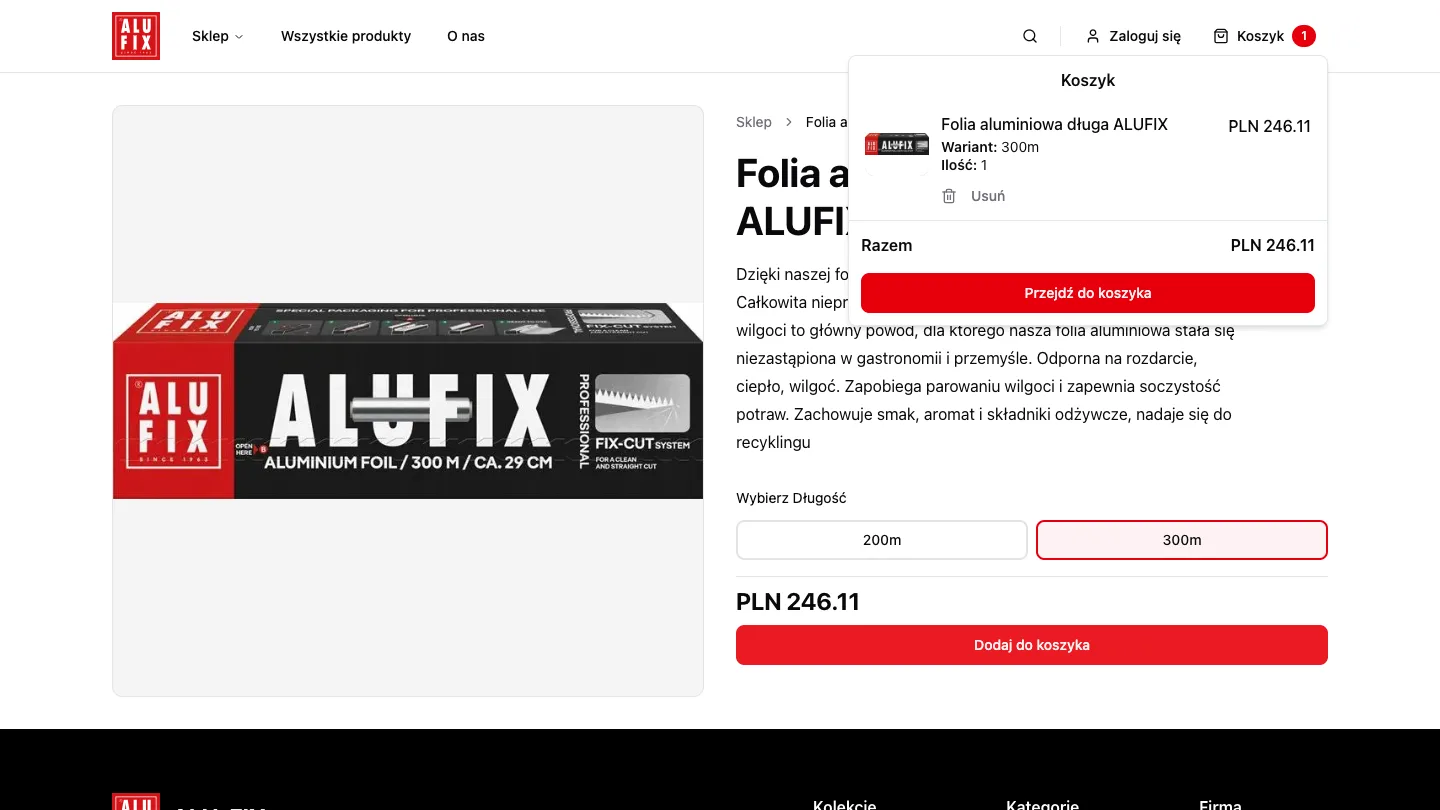
The variant sets the price, and the cart is always within reach.
Product and cart
Products have variants, such as the length of a foil roll. Until a customer picks a variant, they see a from price and cannot add the product to the cart. Once they choose, the price and the button update in place.
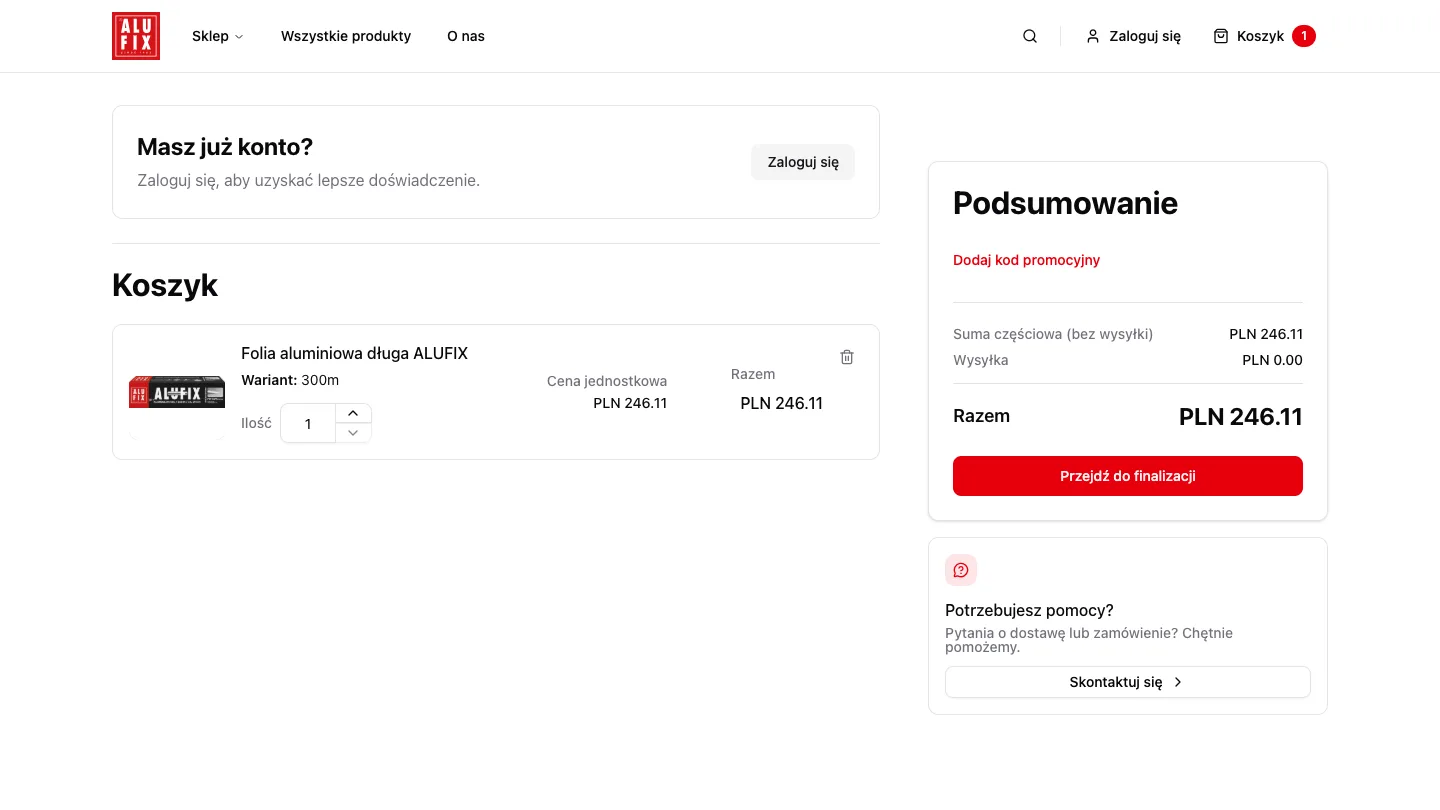
After a product is added, the cart opens from the header without leaving the page. The full cart shows quantities, a summary and a field for a promo code.
One checkout for a consumer and for a company.
Checkout
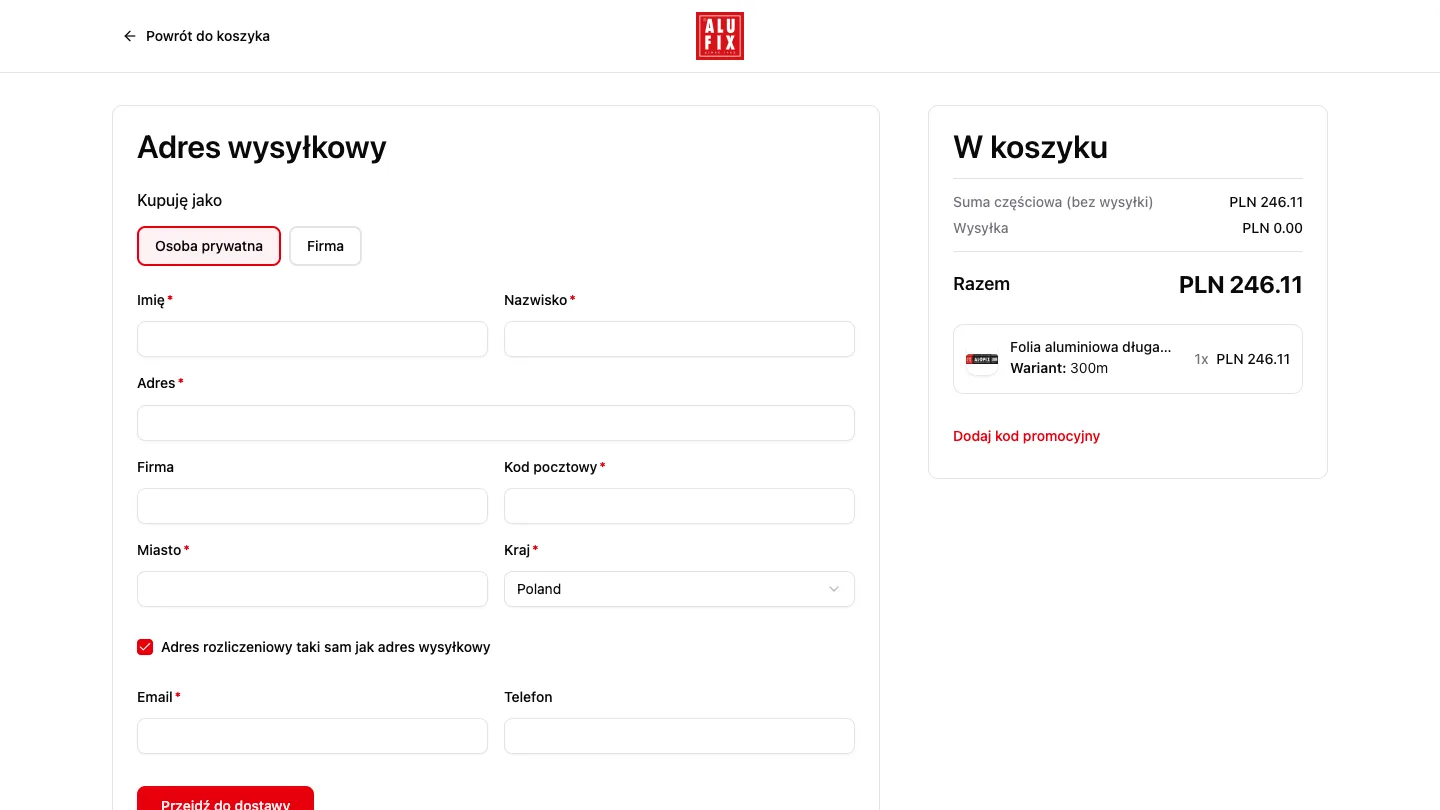
The checkout has three steps: address, delivery and payment. In the first step the customer chooses whether they buy as a private person or as a company. The cart summary stays visible the whole time.
Customers can buy without creating an account. Those who have one sign in from the cart.
Medusa.js underneath, a custom storefront on top.
Platform
Medusa.js handles the commerce layer: products and variants, prices, the cart and orders. The storefront was built separately in Next.js, so the look of the store and the purchase path are not limited by a template.
The store runs in Polish and English, with separate addresses for each language version.
One team from the catalog to order completion.
Scope and accountability
Evelumo was responsible for the design and implementation of the whole path. Experience design and platform behaviour were developed together, not as an isolated frontend and separate store logic.
The public store shows that the implemented path is complete. It does not by itself prove sales growth or basket value, which is why you will not find such numbers here.
- categories, collections, brands, filters and search
- product pages with variants and prices
- header cart and a full cart with a promo code
- checkout for consumers and companies
- customer accounts and two language versions
Questions about the Alufix project
What was built for the Alufix store?
Evelumo designed and built an online store on Medusa.js with a Next.js storefront. The scope covers a catalog of 85 products in 20 categories, filters and search, product pages with variants, a cart and a three-step checkout for consumers and companies. The store runs in Polish and English.
Can companies buy in the Alufix store?
Yes. In the first checkout step the buyer chooses whether they buy as a private person or as a company. Both groups use the same catalog, cart and checkout, so the store does not need a separate version for business customers.
Is Medusa.js the right choice for every store?
No. If you sell in a standard way and an off-the-shelf platform does not block change, SaaS is often enough. Medusa makes sense when your sales need custom pricing, roles, orders or integrations. Whether it fits your store, we will tell you plainly on the first call.

Do you need a store where sales and business logic work as one?
Show us what buying from you looks like today. We will assess whether you need a new store, an extension of the current platform or an off-the-shelf solution.