
Sylius vs Medusa: a comparison for companies choosing an e-commerce platform
If one agency quoted you Sylius and another quoted Medusa, you are comparing two projects, not two products. This article breaks both platforms into the parts that actually differ for a company: stack and team, licences and what is paid, B2B in the core, the storefront, and time to a live store. We write it as a company that builds on Medusa, and we say plainly when Sylius is the better choice.

Short answer
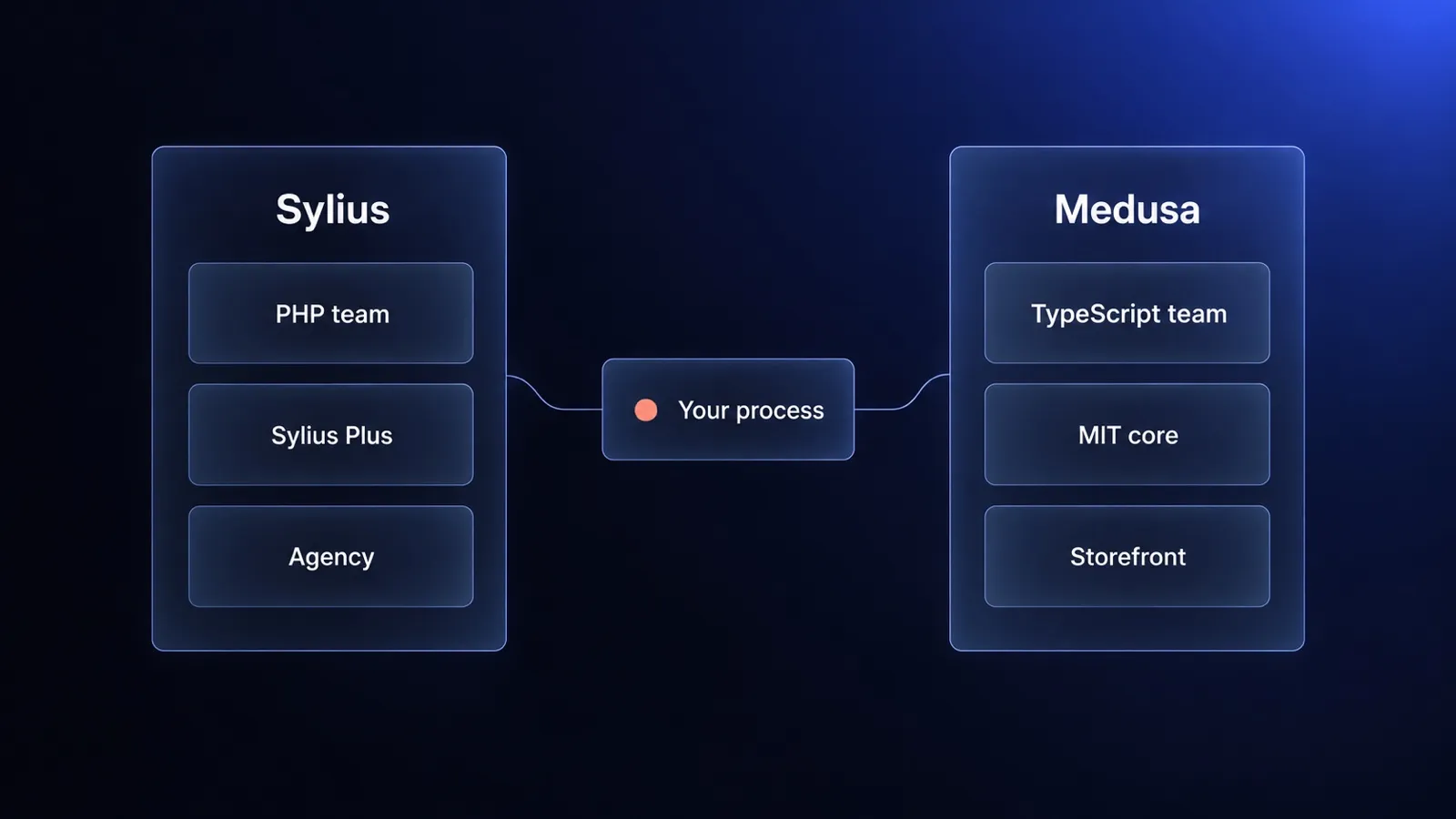
Sylius and Medusa solve the same problem: a store built around a company’s process rather than around the settings of an off-the-shelf platform. They differ in the stack and in what is paid. Sylius is PHP and Symfony, an MIT-licensed core, and features such as the B2B Suite, RBAC and multi-source inventory in the commercial Sylius Plus from 800 euro per year (source, as of 2026-10). Medusa is Node.js and TypeScript, an MIT-licensed core with customer groups, price lists and sales channels, and a paid Enterprise edition covering RBAC and SSO. Choose Sylius when you have a Symfony team or partner and want to buy ready-made B2B modules for a licence fee. Choose Medusa when you want one TypeScript stack for backend and storefront, an open B2B foundation and code you own from day one. In both cases the outcome is decided by the team that maintains the code after launch, not by the platform’s name.
What Sylius is, what Medusa is
Sylius is an open source e-commerce platform written in PHP on the Symfony framework, developed by the Polish company Sylius. According to the project’s composer.json, the 2.0 branch is MIT-licensed, requires PHP 8.2 and runs on Symfony 6.4 or 7.1. Version 2.0 shipped on 12 November 2024 with a new Bootstrap-based admin and shop and an API built on API Platform. Next to the free Sylius Standard, the company sells Sylius Plus: commercial modules for B2B (B2B Suite), marketplace, advanced multi-store, returns (RMA), multi-source inventory, loyalty, RBAC, partial shipment, request for quotation (RFQ), product configurator and subscriptions, with SLA-backed support and a one-day response time. Hosting is on your side; for the cloud, Sylius points to a PaaS offering with its partner Platform.sh.
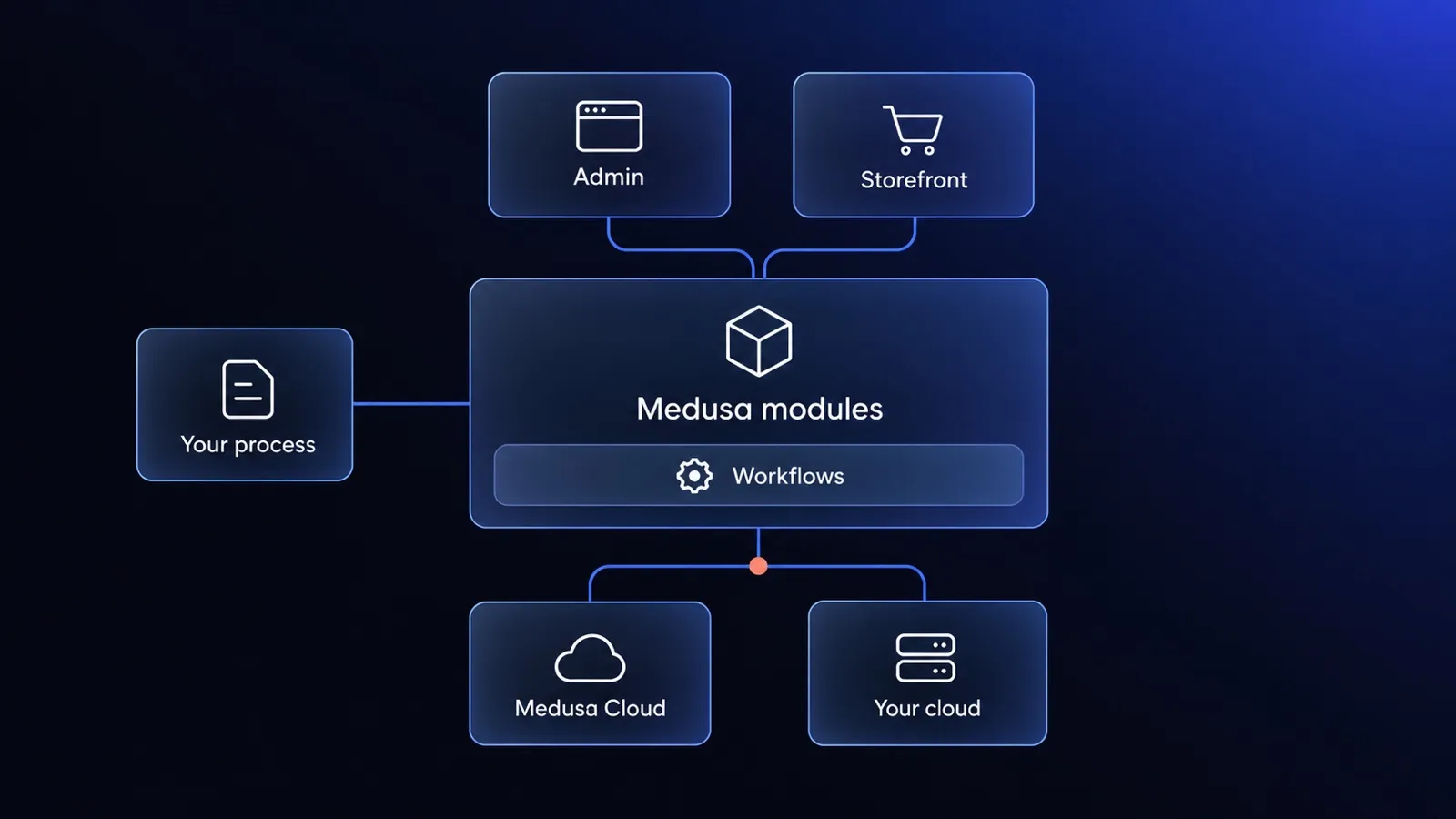
Medusa is an open source e-commerce platform written in Node.js and TypeScript, developed by MedusaJS, Inc. The core is MIT-licensed. Version 2.0 shipped on 23 October 2024 and rebuilt the platform around modules (products, cart, orders, pricing, inventory) and workflows. Medusa delivers a backend with an API and an admin panel; the customer-facing store is built separately, usually in Next.js. The paid Enterprise Edition has covered RBAC and SSO since August 2026, and the managed Medusa Cloud starts at $29 per month (source, as of 2026-10) plus usage. We cover it in more depth in what is Medusa.js.
These two paragraphs already contain the most important difference: Sylius sells ready-made modules for a licence and ships a store in the box, Medusa gives you an open core and leaves more to build. That is not a difference in quality. It is a difference in what you pay for and who does the work.
The comparison in one table
| Criterion | Sylius | Medusa |
|---|---|---|
| Language and framework | PHP 8.2+, Symfony 6.4 or 7.1 | Node.js, TypeScript |
| Core licence | MIT (Sylius Standard) | MIT |
| What is paid | Sylius Plus: B2B Suite, Marketplace Suite, RBAC, RMA, multi-source inventory and more, from 800 euro per year | Enterprise Edition: RBAC and SSO; Medusa Cloud as hosting |
| B2B in the core | customer groups, price lists, promotions; company accounts and quotes in the B2B Suite (Plus) | customer groups, price lists, sales channels; company accounts and quotes as custom modules |
| Storefront | Bootstrap shop in the box, rebuilt for the brand | none in the core; a Next.js starter, designed around the purchase path |
| Admin panel | in the box, on Bootstrap | in the box, extensible with custom views |
| Hosting | your own server or PaaS with Platform.sh | your own cloud or Medusa Cloud |
| Vendor support | community; SLA in Plus | community; Enterprise |
| Typical implementer | Symfony and PHP agencies, including Sylius partners | TypeScript and Node.js teams |
| Time to a live store | depends on the agency and the Plus scope | on our foundation 30 days, from €10,000 net |
The table says what separates the platforms. It does not say which to pick. Four questions below do.
Question 1. Which team will maintain the code after launch
This question matters more than every feature combined. A store on Sylius or Medusa is code that somebody has to develop, upgrade and fix for years. If you have PHP and Symfony people in-house or at a partner, Sylius is natural for them: same framework, same tooling, same community. If your team or partner works in TypeScript, Medusa lets you build the backend and the storefront in one language, one repository and one toolchain.
The worst case looks the same on both: the agency implements, leaves, and nobody in the company knows the stack. We see it at companies on Sylius whose Symfony and PHP upgrades eat the development budget, and at companies on Medusa v1 that nobody moved to v2. So before you choose a platform, choose the team and ask them what they will be maintaining in three years.
Question 2. What you want to pay for: a licence or work
The core of both platforms is free. The difference is what you buy on top.
In Sylius, the features B2B sales depend on sit in Sylius Plus: the B2B Suite, RBAC, multi-source inventory, returns. According to the description of the licence model, modules can be bought separately, and the price depends on gross merchandise volume, geographic scale, business model, the number of modules and whether it is a migration or an upgrade. The licence is paid monthly, yearly or as a lifetime licence. You get ready-made, vendor-maintained modules and SLA support. You pay a licence that grows with turnover.
In Medusa, customer groups, price lists and sales channels are in the MIT core, and company accounts, quotes and order approvals are built as custom modules following the official B2B recipe. Only RBAC and SSO are paid, in Enterprise. You get an open foundation and work to do. You pay for the work once, and the code belongs to you.
Neither road is objectively cheaper. A company that wants to buy ready-made B2B and has the budget for a licence that grows with turnover will do well with Sylius Plus. A company with unusual sales rules that prefers to pay for writing them into code it owns will do well with Medusa. We run the same calculation in custom vs off-the-shelf software.
Question 3. How much storefront you want in the box
Sylius 2 ships a Bootstrap shop and admin. For a project where the store has to look correct rather than distinctive, that saves work. For a brand that wants a purchase path designed for its customers, that store gets rebuilt anyway.
Medusa ships no store. It gives you the API and a Next.js starter, and the storefront is designed and built separately. That is more work at the start and a second application to maintain. In return, the purchase path, from categories and search to cart and checkout, does not depend on a theme system. In our implementations the storefront is part of the foundation, so the client does not start from a blank page.
Question 4. How fast the store has to take orders
Both platforms are frameworks, so time to a live store depends on the vendor, not on the platform. A Sylius agency with its own accelerators will ship faster than a team learning Sylius. The same applies to Medusa.
With us that time is written into the offer: live e-commerce in 30 days, from €10,000 net, on our implementation foundation with Medusa. A larger scope, such as ERP integrations or data migration, is quoted at a fixed price after a conversation. If you are comparing quotes, ask both sides for the same thing: the date from which the store takes orders and the list of what works on that date.
When Sylius is the better choice
We say this plainly, because otherwise this comparison would be worthless. Choose Sylius when:
- you have a PHP and Symfony team in-house or at a partner that will maintain the code for years,
- you want to buy ready-made B2B, marketplace, returns or loyalty modules with vendor support and accept a licence tied to turnover,
- your current systems and integrations are in PHP and your team knows them inside out,
- you need a shop and admin in the box, and storefront design is not a brand advantage,
- you work with a Sylius partner agency that has its own accelerators and references in your industry.
When Medusa is the better choice
Choose Medusa when:
- you want one TypeScript stack for backend, admin and storefront, maintained by one team,
- your B2B sales rules are unusual and you prefer to write them into code you own rather than fit them to a ready module,
- you accept that the storefront is a separate application and want to design it around the purchase path,
- you do not want a licence that grows with turnover and accept that RBAC and SSO are in the paid Enterprise edition,
- you want a live store in 30 days on a proven implementation foundation.
How we build and grow such stores is on the Medusa.js development page, and what a B2B platform with company accounts and per-customer price lists looks like is on the B2B e-commerce page.
What about PrestaShop and Magento
The question “Sylius or Medusa” comes up most often at companies that have outgrown PrestaShop or Magento. Both platforms in this comparison are a step in the same direction for them: from a store with plugins to a store with code built around the process. If you run Magento today, we run the same calculation: the cost of maintaining it for 24 months against the cost of moving. How we run a store migration is described separately.
How we make this decision with a client
We do not start with the platform. We start with a 20-minute conversation about how the company sells, who will maintain the code and what the store does not need to do. The outcome is a recommendation: buy, build or skip. If Sylius at a Symfony partner turns out to be better, we say so and do not send an offer. If Medusa turns out to be better, you get the scope and a fixed price for the first stage.
Frequently asked questions
Is Sylius free?
The core is. Sylius Standard is open source under the MIT licence, as the project's composer.json and the comparison table on sylius.com confirm. Sylius Plus is paid: commercial modules such as the B2B Suite, Marketplace Suite, RBAC, returns (RMA), multi-source inventory and the product configurator, with SLA-backed support. According to the Sylius website, Plus pricing starts from 800 euro per year and depends on turnover, scale, business model and the number of modules.
Is Medusa free?
The core is. Medusa.js is open source under the MIT licence, with no licence fee and no share of sales. Paid are the Enterprise Edition, which since August 2026 covers role-based access control (RBAC) and single sign-on (SSO), and the managed Medusa Cloud hosting billed as a monthly plan plus usage. On both platforms you pay for building, hosting and maintaining the store.
Which platform is better for B2B, Sylius or Medusa?
It depends on where the B2B logic should live. In Sylius, company accounts, B2B pricing and quote requests sit in the paid B2B Suite within Sylius Plus. In Medusa, customer groups, price lists and sales channels are in the open core, and company accounts with employees, quotes and approvals are added as custom modules following the official recipe. Sylius gives you more ready-made for a licence fee, Medusa gives you an open foundation and work to do in code you own.
Can a store be migrated from Sylius to Medusa?
Yes. Both platforms have a similar data model: products with variants, channels, price lists and promotions, so the sales logic carries over well. The biggest work is the storefront and the integrations, because in Medusa they are built separately. Before anyone proposes a migration, check whether the problem is the platform or the lack of a team maintaining it: sometimes a Symfony team is the better answer.
Why does Evelumo build on Medusa rather than Sylius?
For three reasons. First, one TypeScript stack for backend and storefront lets us build and maintain a store with one team. Second, the open B2B core and the MIT licence mean the client pays no licence for the features their sales depend on, and the code belongs to them. Third, we have our own implementation foundation on Medusa, which is why a live store launches in 30 days. These are our reasons, not proof that the platform is superior.
Keep reading
What is Medusa.js? A guide for decision makers (v2, hosting, cost)
Medusa.js is an open-source commerce engine you build your store on. What v2 is, Medusa Cloud vs your own hosting, what it costs and when to skip it.
Custom or off-the-shelf software? Calculate the cost of the whole operating model.
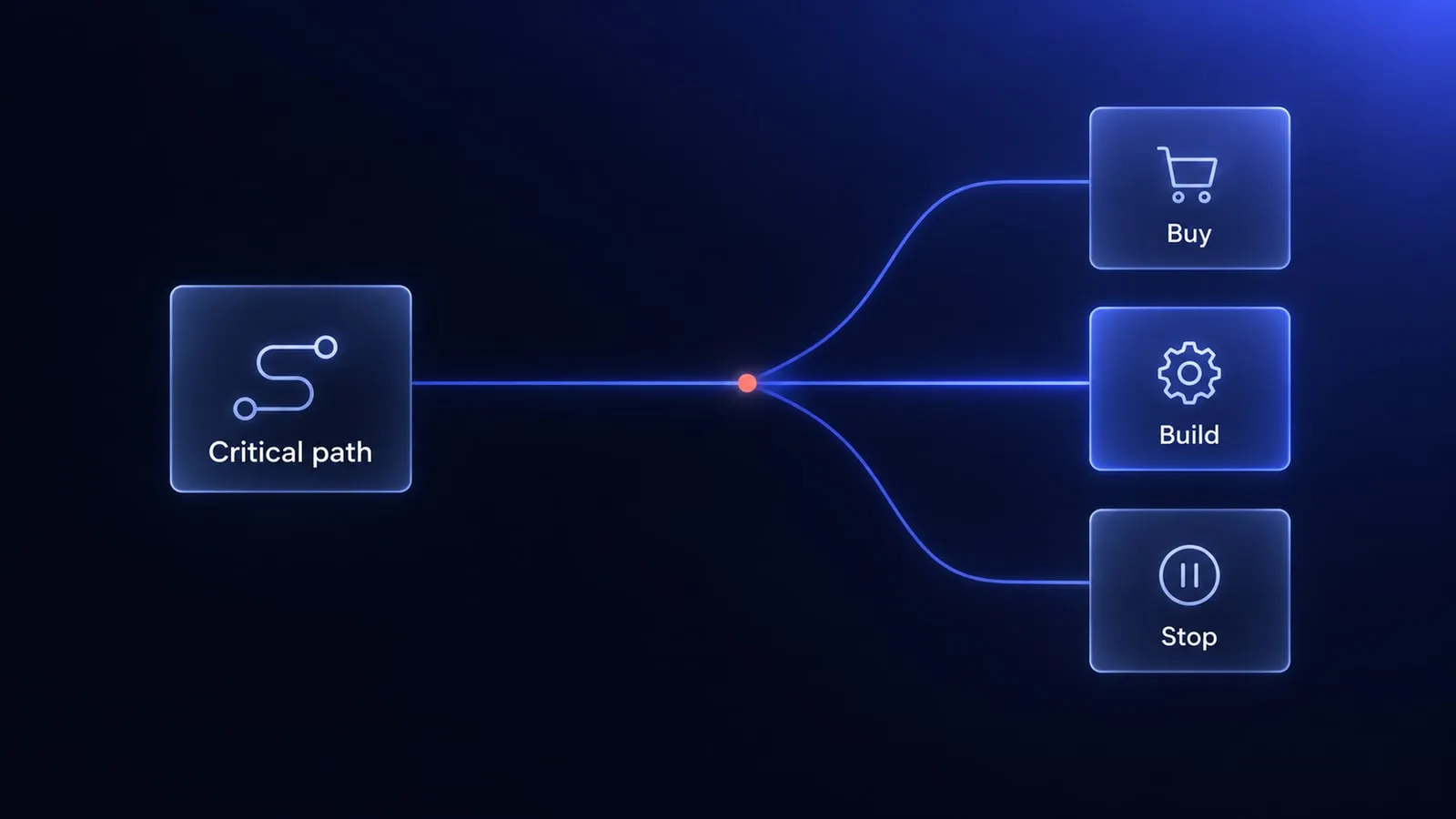
A practical custom versus off-the-shelf framework covering 24-month cost, process fit, integrations, risk and product advantage.
Shopify Plus pricing in 2026: the real total cost for B2B
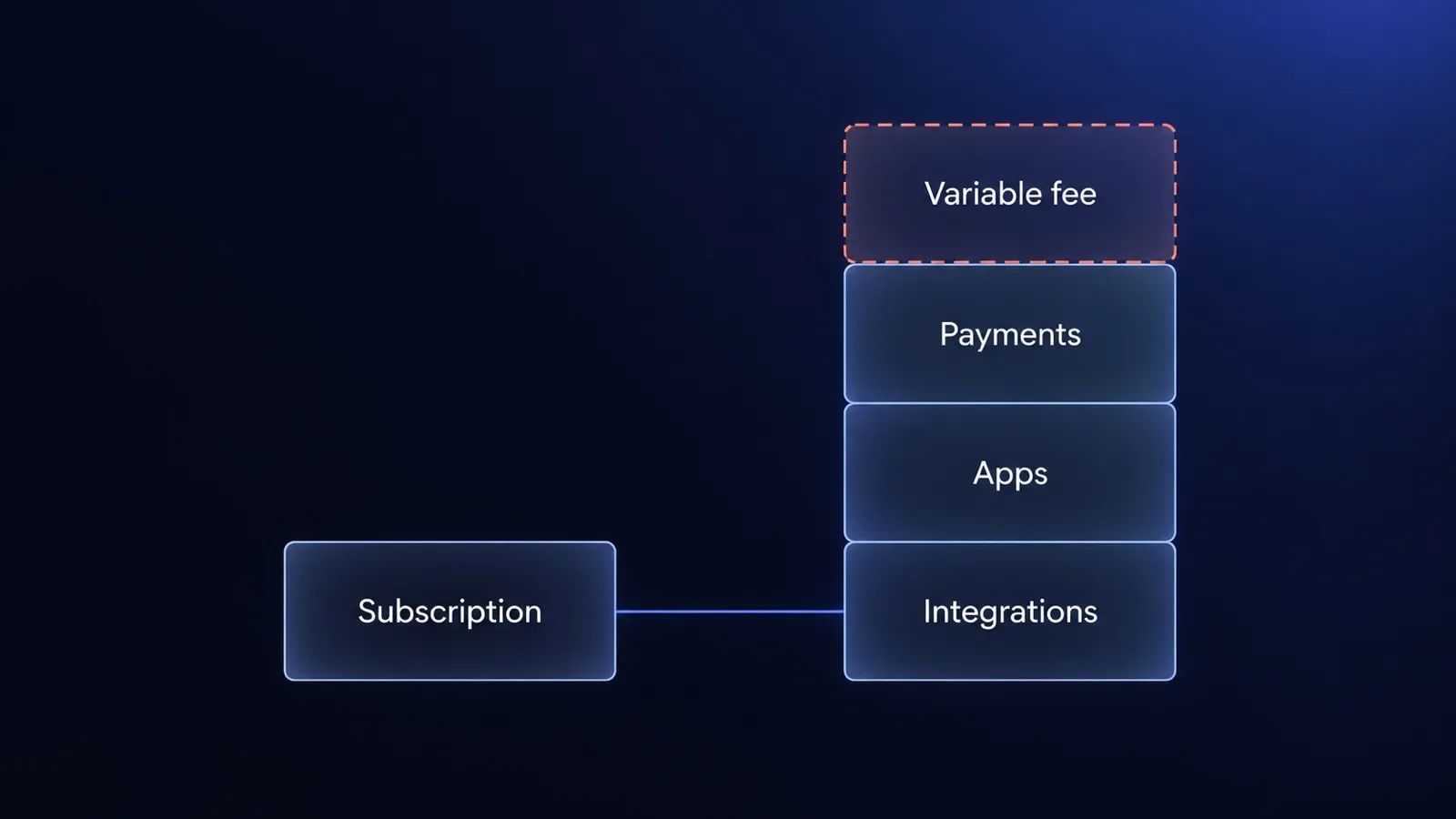
Shopify Plus pricing starts at $2,300 a month. For B2B, the real cost sits in the variable fee, payments, apps and integrations. What to count before you sign.


Questions after reading?
Tell us what the article leaves open for your company. We reply within one working day and prepare a hypothesis before any call.
A question about the article Something does not match your situation, or you want to check an assumption behind a number.
Your own problem Describe the sales process and where your current platform stops being enough.
The next step You are weighing custom, off-the-shelf or a migration and want a second opinion before you commit.