
Your ERP vendor's B2B module or a custom B2B platform: which one fits?
If you already run an ERP, its vendor probably sells a web shop or B2B portal that reads your prices and stock directly. This comparison shows when that module is enough, where it stops fitting, and when a custom B2B platform connected to the same ERP pays off.

Short answer
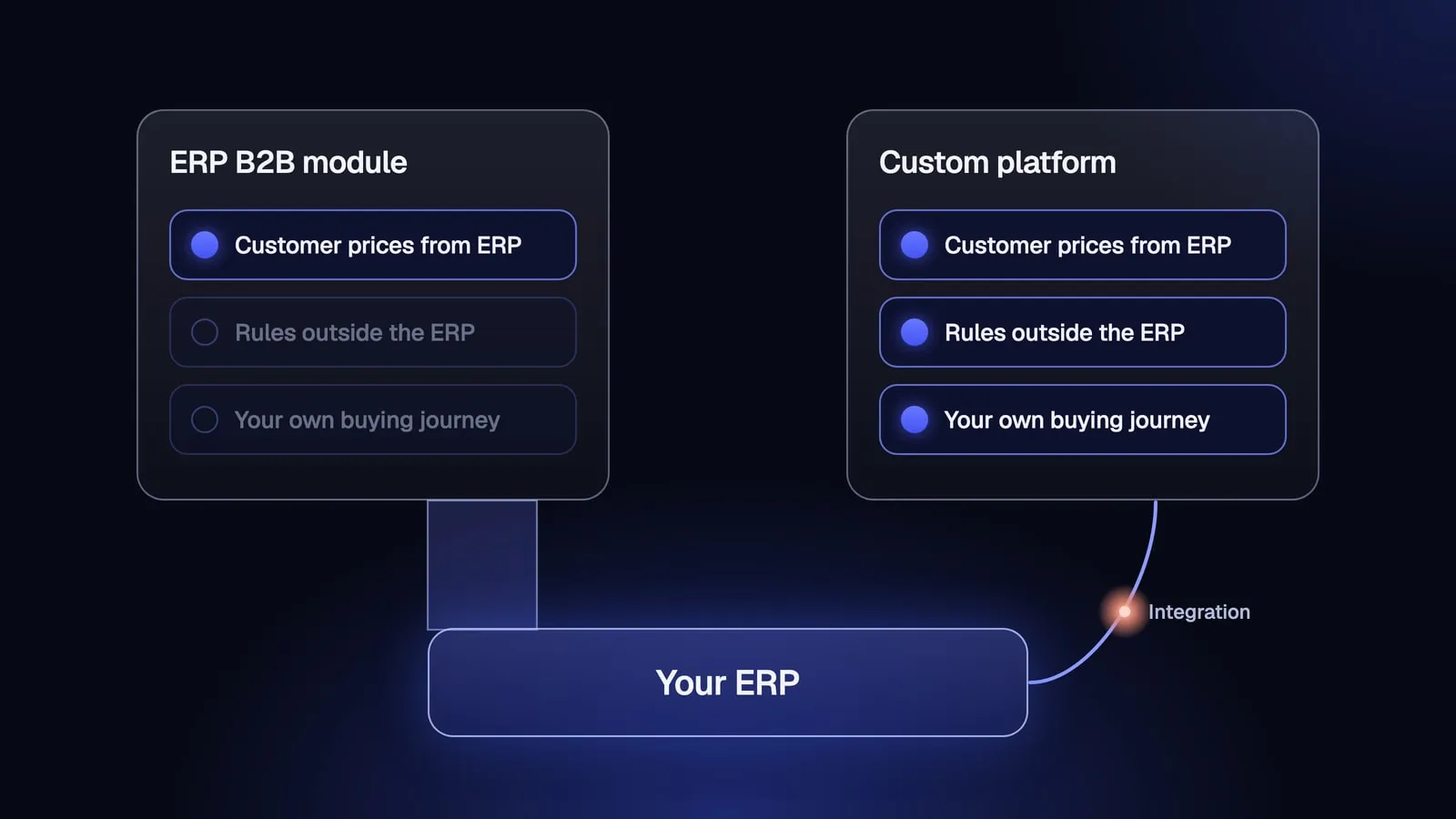
Choose your ERP vendor’s B2B module when every customer price and term already lives in the ERP and your ordering process fits what the module does out of the box: customer price lists, several buyers per company, credit limits and repeat orders. Choose a custom B2B platform connected to the same ERP when the logic that wins orders sits outside it: prices from rules the ERP does not calculate, a configurator, data from more than one system, or one brand serving retail and B2B buyers with its own buying journey. Decide on one real repeat order run end to end in each option and on the 24-month cost, not on a feature list.
What counts as an ERP vendor’s B2B module?
An ERP B2B module is a web shop or customer portal that your ERP vendor sells, or that is built for one ERP family, and that reads customer prices, stock and documents from that ERP. It comes in three shapes:
- A web shop app inside the ERP suite. Odoo’s eCommerce app runs in the same database as sales, inventory and invoicing. Its B2B and B2C documentation shows how to open the shop on invitation only and show each invited customer the price list assigned to them.
- A commerce add-on from the ERP vendor. Microsoft sells Dynamics 365 Commerce with an e-Commerce add-on licensed per tenant, on top of the Commerce user licences.
- A B2B product built for specific ERPs. Comarch sells two for its own ERP: e-Sklep B2B in its cloud and Comarch B2B, which runs on the customer’s infrastructure directly on the ERP database, according to Comarch’s comparison of the two. Sana Commerce sells a B2B platform for SAP and Microsoft Dynamics ERPs that reads prices and stock from the ERP.
All three promise the same thing: the shop shows what the ERP knows, with no separate integration to build. That promise is real, and for many wholesalers and manufacturers it is enough. How data ownership splits between ERP and shop in general is explained in our guide to ERP and ecommerce.
What does an ERP B2B module cost?
Published prices for ERP B2B modules range from a few euros per internal user to thousands of dollars a month, and the licence is only part of the cost.
| Module | Published starting price | What it covers |
|---|---|---|
| Odoo eCommerce | €14.90 per user a month in the first year, then €18.60 (Standard) (source, as of 2026-10) | All apps for internal users. Customers using the portal are not paying users. External API and multi-company need the Custom plan |
| Dynamics 365 Commerce e-Commerce | $4,000 per tenant a month, paid yearly (source, as of 2026-10) | The e-Commerce add-on, on top of Commerce at $210 per user a month |
| Comarch e-Sklep B2B | from PLN 899 a month (source, as of 2026-10) | Cloud shop for Comarch ERP Optima, XL and Altum. Comarch B2B for XL and Altum has no public price |
| Sana Commerce | Not published | Three packages, quoted per project |
To that add the ERP licence itself, the partner who configures the module and connects it to your processes, payment fees and any add-ons. Our guide to ecommerce website cost shows which lines to include for a fair 24-month comparison.
What does an ERP B2B module do well?
An ERP B2B module does best what the ERP already knows: customer-specific prices, stock, payment terms and documents. For a typical wholesaler that covers most of the ordering process.
- Customer prices without an integration project. Prices and discounts set per customer in the ERP appear in the shop for that customer.
- Accounts that match B2B buying. Modules such as Comarch e-Sklep B2B support several logins per company and credit limits, so one company can have buyers, approvers and an accountant.
- Invoices and order history in the portal, because they come from the same system that issues them.
- One vendor and one partner ecosystem for ERP and shop, with upgrades shipped by the vendor.
If your repeat order is a customer price list from the ERP, a few buyers per company, payment terms and a credit limit, the module will most likely handle it, and there is no reason to build it again.
Where does an ERP B2B module stop fitting?
An ERP B2B module stops fitting where your ordering process leaves the ERP’s data model. These are limits of fit, not of quality, and they show up in four places:
- Prices from rules the ERP does not calculate, such as configured products, project pricing or prices tied to raw material indexes. Comarch’s product configurator, for example, can add a product with a price calculated outside the shop, but it needs programming, the Sync service and template changes.
- More than one source system: two ERPs after an acquisition, a separate PIM or a warehouse system that knows stock better than the ERP. A module built for one ERP family expects that ERP to own the data.
- Retail and B2B under one brand. Some modules are B2B only. Comarch B2B, for example, has no marketing features or external integrations, according to Comarch’s own comparison.
- The buying experience. Modules run on the vendor’s templates. That suits most wholesalers, but not every brand that competes on how easy it is to order.
If you recognise one of these, ask the ERP partner how they would solve it and what it costs before you compare the module with a custom build.
ERP B2B module or custom B2B platform: how do they compare?
| ERP vendor’s B2B module | Custom B2B platform (e.g. Medusa) | |
|---|---|---|
| Data from the ERP | Built in, for one ERP family | Through an integration, from one or several systems |
| Customer prices | From the ERP | From the ERP or from your own rules |
| Retail next to B2B | Depends on the module | Yes, under one brand |
| Changes beyond the standard | Templates, vendor roadmap, partner | Anything, you own the code |
| Licence | Per user, per tenant or per month, set by the vendor | None for the open-source core, you pay for the build, hosting and maintenance |
| Typical reason to choose | Standard wholesale process, one vendor | Ordering logic is how you win business |
For what a dealer or customer portal should offer first, whichever route you take, see our guide to the B2B customer portal.
When does a custom B2B platform pay off?
A custom B2B platform pays off when working around the ERP module becomes your team’s daily work. In that case the ERP stays the source of truth for prices, stock and documents, and the custom platform reads them through an ERP integration and adds the logic the module lacks.
We build B2B platforms on Medusa, whose open-source core supports price lists per customer group and company accounts. Our page on B2B ecommerce development describes the scope, from company accounts to quick reorder. A working store on our foundation launches in 30 days from €10,000 net, and hosting and maintenance start from €100 net a month. The ERP integration is quoted separately, once we know which data flows in which direction.
When is a custom platform the wrong choice?
A custom platform is the wrong choice when every price and term is in the ERP, your ordering process is standard, and nobody in your company will own the store after launch. Then the vendor’s module gives the same result faster and cheaper, and the money is better spent on cleaning up ERP data.
How do you decide in one afternoon?
- Pick one real repeat order from a business customer, with their price list, discount, payment terms and the people who place it.
- Run it in the module’s demo with the ERP partner and note every step that needs manual work, programming or a workaround.
- Ask for the full 24-month cost: licence, ERP, partner, add-ons and payment fees.
- Get a quote for a custom platform on the same order and the same scope.
- Check where your ERP and current shop disagree, because every mismatch is work in either option.
If the order runs through the module without workarounds, choose the module. If the workarounds appear at prices, rules or the buying journey, and those are what win you orders, a custom platform deserves a quote.
Frequently asked questions
What is an ERP B2B module?
An ERP B2B module is a web shop or customer portal sold by your ERP vendor, or built for one ERP family, that shows each business customer their own prices, stock and documents straight from the ERP. Examples include the eCommerce app in Odoo, the e-Commerce add-on for Microsoft Dynamics 365 Commerce, Comarch e-Sklep B2B and Comarch B2B for Comarch ERP, and Sana Commerce for SAP and Microsoft Dynamics.
How much does an ERP vendor's B2B module cost?
It ranges from a few euros per internal user to thousands of dollars a month. Odoo includes eCommerce in its per-user plans and does not charge for customers who use the portal. Microsoft lists the Dynamics 365 Commerce e-Commerce add-on at $4,000 per tenant a month, paid yearly, on top of Commerce user licences. Sana Commerce does not publish prices. In every case, add the partner who implements it and compare 24 months for the same scope.
When is a custom B2B platform better than the ERP's module?
When the logic that wins orders is not in the ERP: prices calculated from rules outside it, a product configurator, data from more than one ERP or a separate PIM, or a retail and B2B channel under one brand with its own buying experience. If every price and term lives in the ERP and your ordering process is standard, the vendor's module is usually faster and cheaper.
Can a custom B2B platform work with my existing ERP?
Yes. A custom platform reads prices, stock and customer data from the ERP through an integration and sends orders back, so the ERP stays the source of truth. The scope depends on your ERP version and on which data has to flow in which direction. Check where your ERP and current shop disagree before you choose, because every mismatch is work in either option.
Keep reading
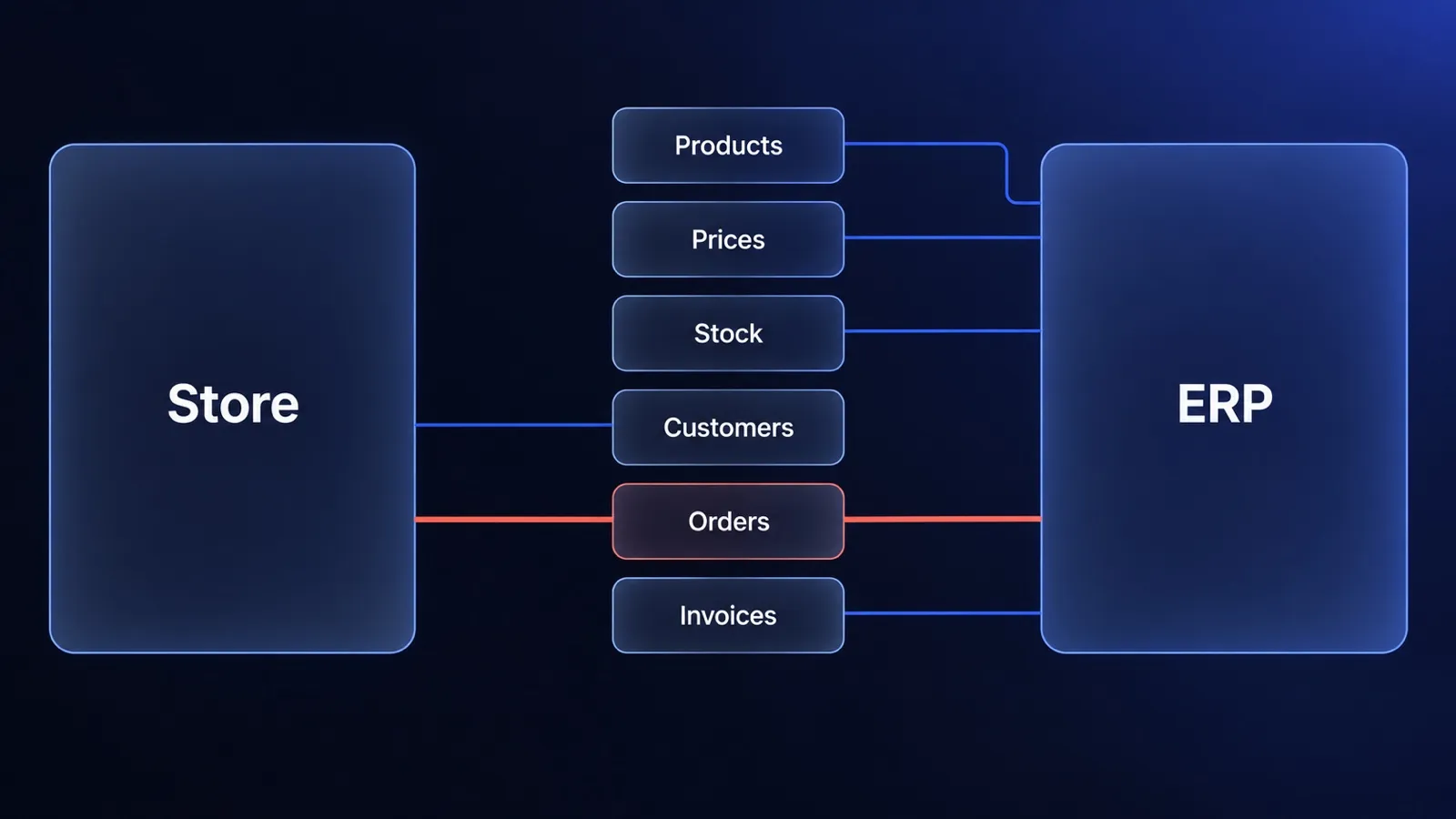
ERP and ecommerce: who owns which data, and how to connect the two
ERP ecommerce guide for decision makers: which system owns products, prices, stock and orders, three integration patterns, cost drivers and when to wait.
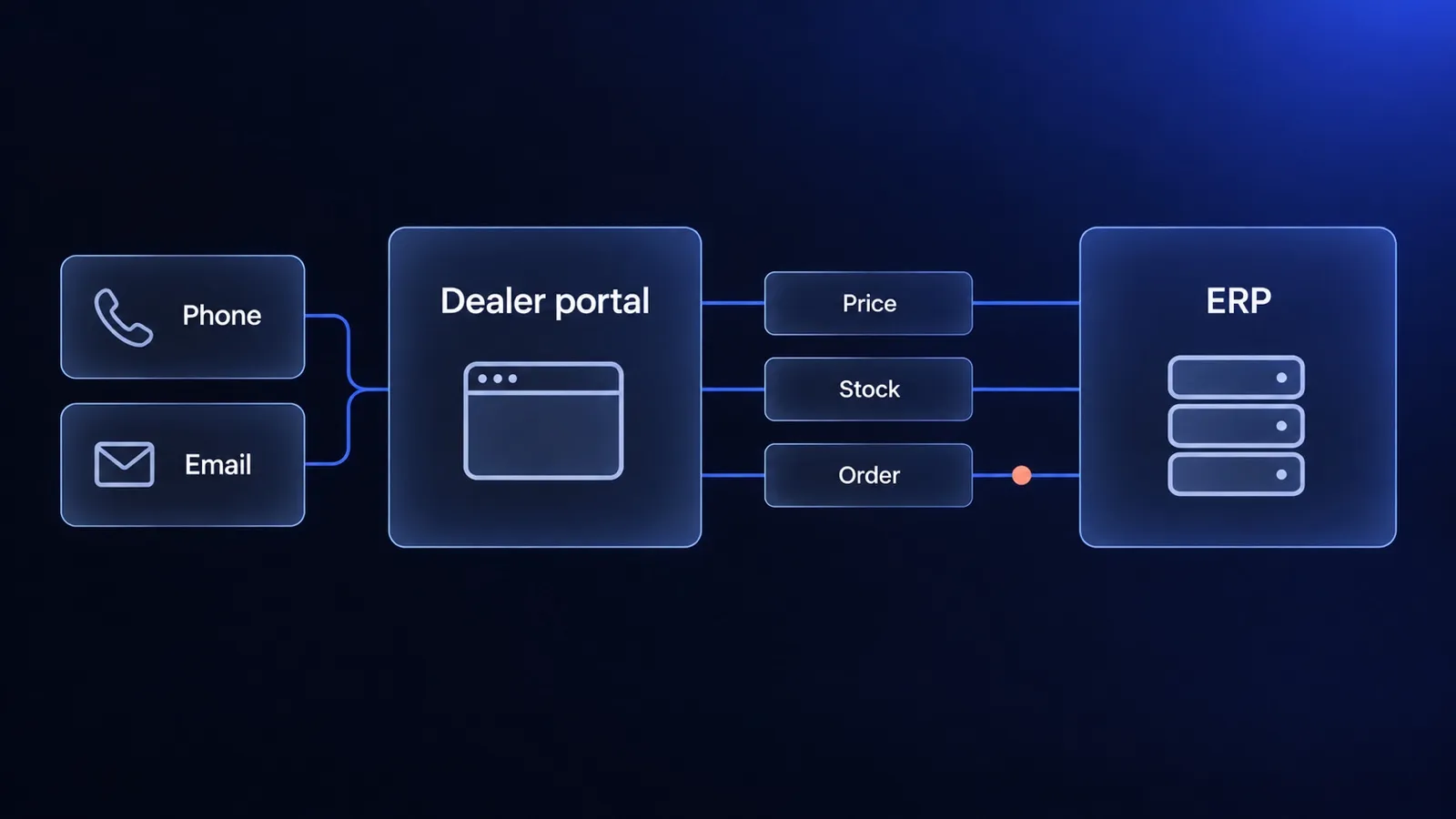
B2B customer portal for a dealer network: what to launch first and where the data comes from
B2B customer portal for a dealer network: the questions it must answer, the data the ERP owns, when punchout matters and how to launch in stages.
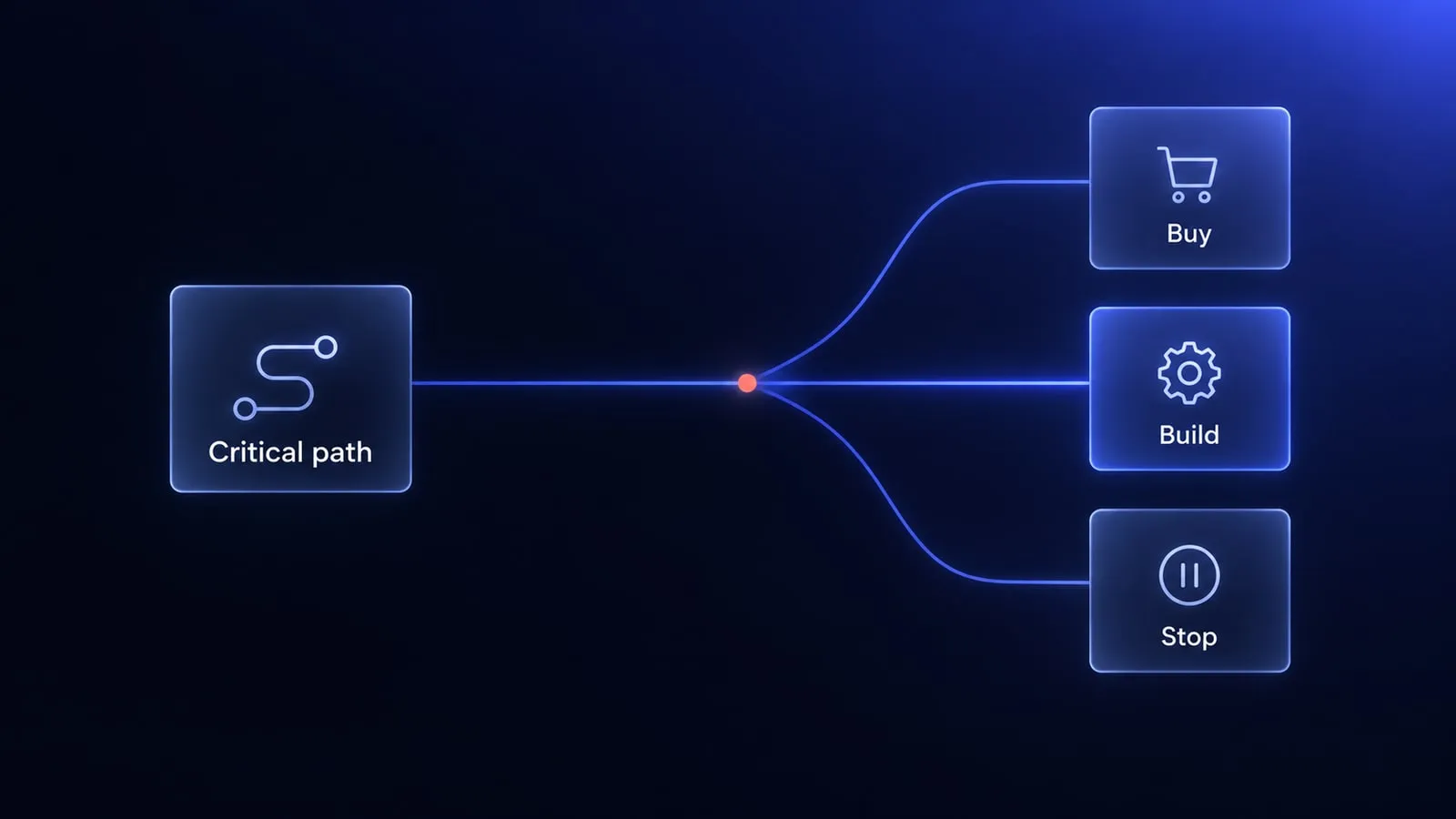
Custom or off-the-shelf software? Calculate the cost of the whole operating model.
A practical custom versus off-the-shelf framework covering 24-month cost, process fit, integrations, risk and product advantage.


Questions after reading?
Tell us what the article leaves open for your company. We reply within one working day and prepare a hypothesis before any call.
A question about the article Something does not match your situation, or you want to check an assumption behind a number.
Your own problem Describe the sales process and where your current platform stops being enough.
The next step You are weighing custom, off-the-shelf or a migration and want a second opinion before you commit.