
How to choose a Medusa.js agency: the questions to ask before you sign
Most Medusa agencies look the same on their websites. The differences show up in a live store you can click through, in how they handle Medusa upgrades and the ERP, and in who owns the code at the end. Here is how to tell them apart.

Short answer
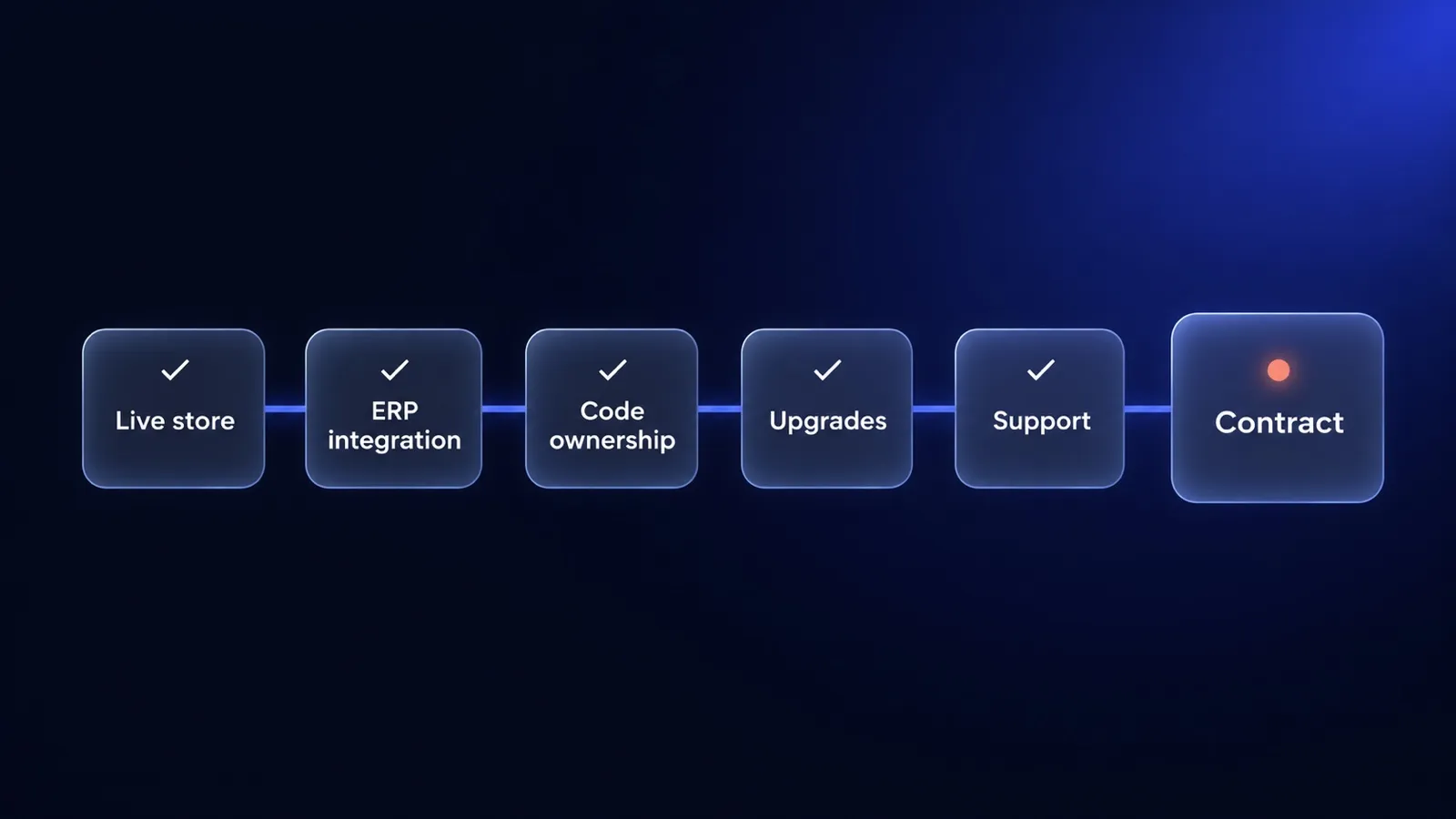
Choose a Medusa.js agency on evidence, not on its services page. Ask to click through a live Medusa store it built, ask how it handled the breaking changes in Medusa v2.21 and v2.22, ask which ERP it has integrated and what happens when a sync fails, and get in writing that the repository and cloud accounts are yours. A good agency also tells you when Medusa is the wrong choice. We are a Medusa agency ourselves, so use the same questions on us.
Why choosing a Medusa agency is different from choosing a Shopify agency
A Shopify agency configures a platform that Shopify runs for you. A Medusa agency builds and often runs the platform itself: the backend, the admin extensions, the storefront and the integrations. Medusa is an open-source commerce engine under the MIT licence, so there is no vendor holding the platform together after the agency leaves. That makes the agency’s engineering habits part of your product.
Three things follow. You need evidence that the agency ships working stores, not only prototypes. You need to know how it keeps a fast-moving framework up to date. And you need the code and infrastructure in your name, because nobody else will hand them back to you. If you are still deciding whether Medusa fits at all, start with what is Medusa.js and the comparison of Medusa vs Shopify Plus for B2B.
The ten questions to ask before you sign
1. Can I click through a live Medusa store you built?
Ask for a URL of a production store on Medusa, not a case study page. Add a product to the cart, log in if it is B2B, and go as far as the payment step. A good answer is a store you can test today and a clear statement of what the agency built: the backend, the storefront, the integrations, or only part of it. A red flag is a list of logos without links, or demos on sample data only.
2. Which Medusa v2 releases have you upgraded, and how?
Medusa ships often, and some releases break things. Medusa v2.21.0 made every Store API route enforce a strict allowlist of fields and relations, and any field outside it is silently stripped from the response, so a storefront can lose data without an error. Medusa v2.22.0 requires Node.js 22.22.0 or later because Node.js 20 reached end of life. A good answer names the releases, explains how the agency tests the storefront after an upgrade and says who pays for upgrades after launch. A red flag is “we upgrade when needed”.
3. Which ERP have you integrated, and what happens when a sync fails?
The ERP integration is where commerce projects usually go over budget. Ask which systems the agency has connected, which system is the source of truth for prices, stock and customers, and what happens when an order cannot reach the ERP. Medusa has workflows with compensation steps for exactly this case, so a good answer describes retries, alerts and who is notified, not only “we use the API”. A red flag is an integration described only by the list of fields it copies.
4. Who owns the repository, the cloud account and the domain?
Get it in writing that the repository lives in your organisation, the hosting account is in your company’s name and the domain is registered to you, from the first week. A good agency works in your accounts and keeps its own access removable. A red flag is “we will transfer everything at the end of the project”.
5. Where will the store run, and who runs it?
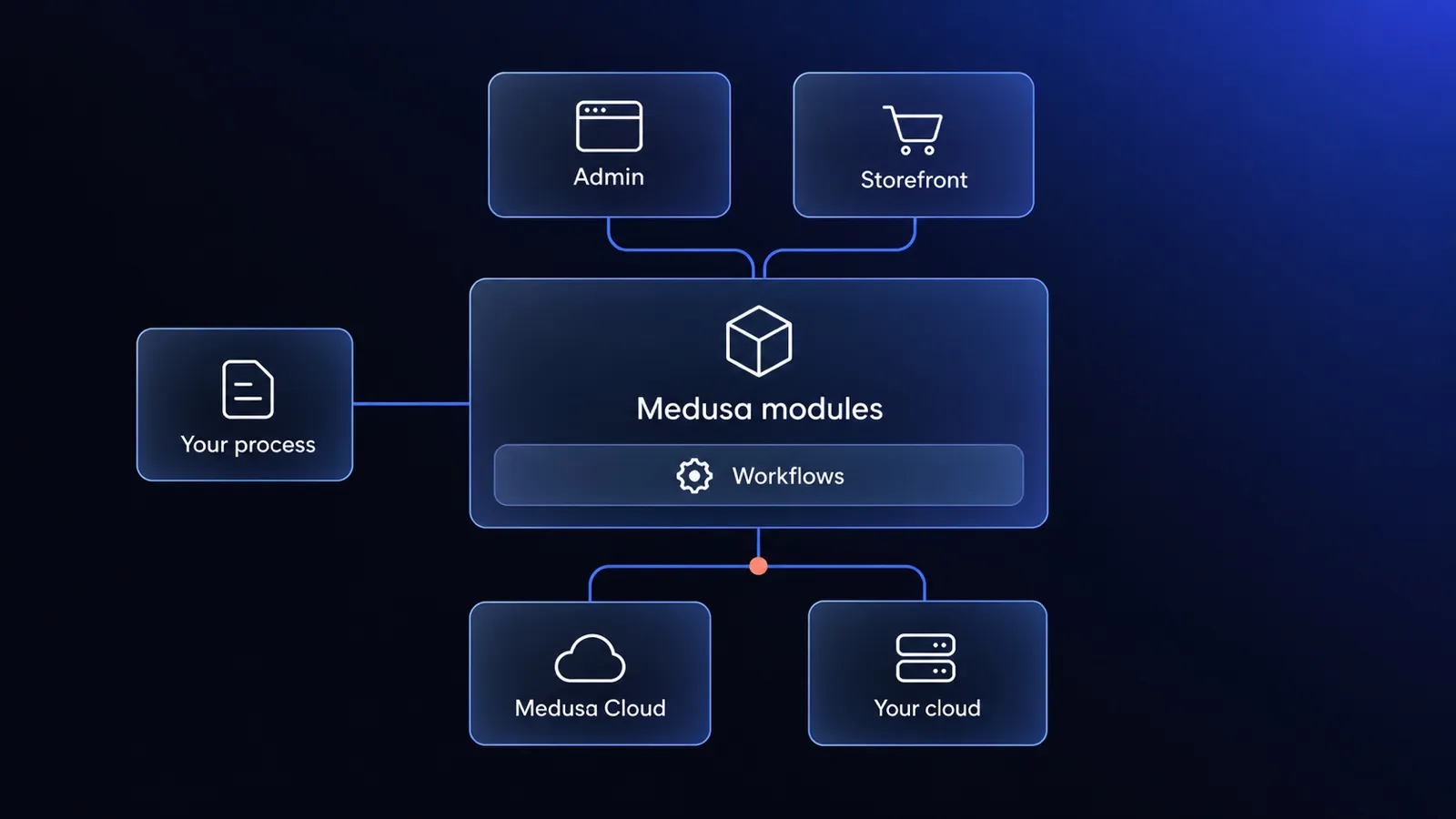
Medusa runs either on Medusa Cloud, the managed hosting from the company behind Medusa, or on infrastructure you choose. Both are valid. Ask which one the agency proposes, why, what it costs per month, and who is on call when the store is down at night. A red flag is hosting on the agency’s own servers with no plan to move it.
6. Do we need Medusa’s Enterprise Edition?
Since August 2026 the Medusa core stays MIT-licensed, but role-based access control (RBAC) and single sign-on (SSO) are Enterprise Edition features that need a commercial agreement with MedusaJS, Inc. or the Enterprise plan on Medusa Cloud. If your B2B store needs staff roles in the admin or company login, ask the agency how it covers that: the paid licence, a custom solution, or a scope without it. A good answer names the cost before you sign.
7. What exactly is in the first release, and what is the price?
Agencies sell Medusa projects either as a fixed scope or as time and materials. Both can work. What matters is that the first release is written down: which processes run end to end, which integrations are live, and which acceptance criteria decide that the release is done. A red flag is a day rate with a range of weeks and no first release defined.
8. How do you test a release before it reaches customers?
Ask what has to be true before anything goes to production. A good answer includes acceptance criteria per feature, automated tests on the critical paths (search, cart, checkout, the order reaching the ERP) and a review by someone who did not write the code. A red flag is manual testing by the same developer, or “the client tests on staging”.
9. Who will we work with?
Ask who designs, who writes the backend and who will answer when something breaks after launch, and whether you will talk to those people directly. A good answer gives you names and roles. A red flag is an account manager between you and everyone who builds the store.
10. When would you tell us not to use Medusa?
This question shows whether you are getting a recommendation or a pitch. A good answer is specific: a standard store that fits Shopify, B2B prices that fit a few catalogs, or no one in your company who will own the store after launch. An agency that recommends a custom Medusa build for every brief is selling, not advising.
A one-page scorecard
| Question | A good answer | A red flag |
|---|---|---|
| Live store | A production URL you can test | Logos and screenshots only |
| Upgrades | Named releases, tests after upgrade, who pays | “When needed” |
| ERP | Source of truth, failure handling, alerts | A list of synced fields |
| Ownership | Your repository and accounts from week one | Transfer at the end |
| Hosting | A choice with a reason and a monthly cost | Agency servers, no exit |
| Enterprise Edition | Need assessed, cost named | Not mentioned |
| First release | Written scope and acceptance criteria | Day rate and a range of weeks |
| Testing | Criteria, automated critical paths, independent review | Developer tests own work |
| Team | Names and direct contact | Account manager only |
| When not Medusa | Specific cases | Never |
Score each agency on the same order: ask it to walk one real order of yours through the store it would build, from the cart to the ERP. The answers to the ten questions become concrete very quickly.
How we answer these questions
We are a Medusa agency, so here are our own answers, with what you can check yourself.
- Live store: Alufix is a store our team built on Medusa.js with a Next.js storefront, and you can open it and go through the purchase journey. ImpregnatyBC is a B2C and B2B store with company accounts.
- Ownership: the store’s code belongs to the client.
- First release: a live B2B or B2C store on our Medusa foundation in 30 days, from €5,000 net, with hosting and maintenance from €100 net a month. The ERP integration is quoted separately after we map which data flows in which direction.
- Testing: no release goes out without acceptance criteria, tests on the critical paths and an independent review.
- ERP: we integrate systems including SAP, Microsoft Dynamics 365, Oracle NetSuite, Comarch ERP and JTL-Wawi. How we approach it is on our ecommerce integrations page.
- When not Medusa: we recommend buy, build or walk away, and we say so when a SaaS platform is enough.
The full scope of our Medusa work is on the Medusa development page.
Common mistakes when choosing a Medusa agency
- Comparing day rates instead of first releases. A cheaper rate with an undefined scope usually costs more over 24 months.
- Treating the ERP integration as a line item. It is the riskiest part of the project and deserves its own questions.
- Leaving ownership for the end. Transfers at the end of a project are where access and history get lost.
- Skipping the upgrade question. A store that is not upgraded for a year turns the next upgrade into a project of its own.
- Not asking when Medusa is wrong. The answer tells you more about the agency than any case study.
Frequently asked questions
What should I ask a Medusa.js agency before signing?
Ask to click through a live Medusa store they built, which Medusa v2 releases they have upgraded and how, which ERP they have integrated and what happens when a sync fails, who owns the repository and cloud accounts, whether you need Medusa's paid Enterprise Edition, what is fixed in the price, how releases are tested, and what maintenance costs after launch.
How much does a Medusa.js agency cost?
Agencies price Medusa projects either as a fixed scope or as time and materials, and public prices are rare. We publish ours: a live B2B or B2C store on our Medusa foundation from €5,000 net in 30 days, and hosting with maintenance from €100 net a month, with the ERP integration quoted after mapping the data. Compare offers on the same scope and over 24 months, not on the day rate.
Do I need a Medusa partner agency?
No. Medusa's core is MIT-licensed open source, so any team can build on it. A partner badge tells you the agency has a relationship with MedusaJS, Inc., not that it has shipped a store like yours. A live store you can test and a reference you can call tell you more. If you need role-based access control or single sign-on, ask how the agency handles the Enterprise Edition licence.
Should a Medusa agency ever recommend Shopify?
Yes. A good Medusa agency tells you when a SaaS platform is enough, for example when your B2B prices fit a few catalogs and nobody will own the store after launch. If an agency recommends a custom Medusa build for every brief, you are hearing a sales pitch rather than a recommendation. Ask them directly when they would not use Medusa.
Keep reading
What is Medusa.js? A guide for decision makers (v2, hosting, cost)
Medusa.js is an open-source commerce engine you build your store on. What v2 is, Medusa Cloud vs your own hosting, what it costs and when to skip it.
Medusa vs Shopify Plus for B2B: which fits a growing wholesale business?
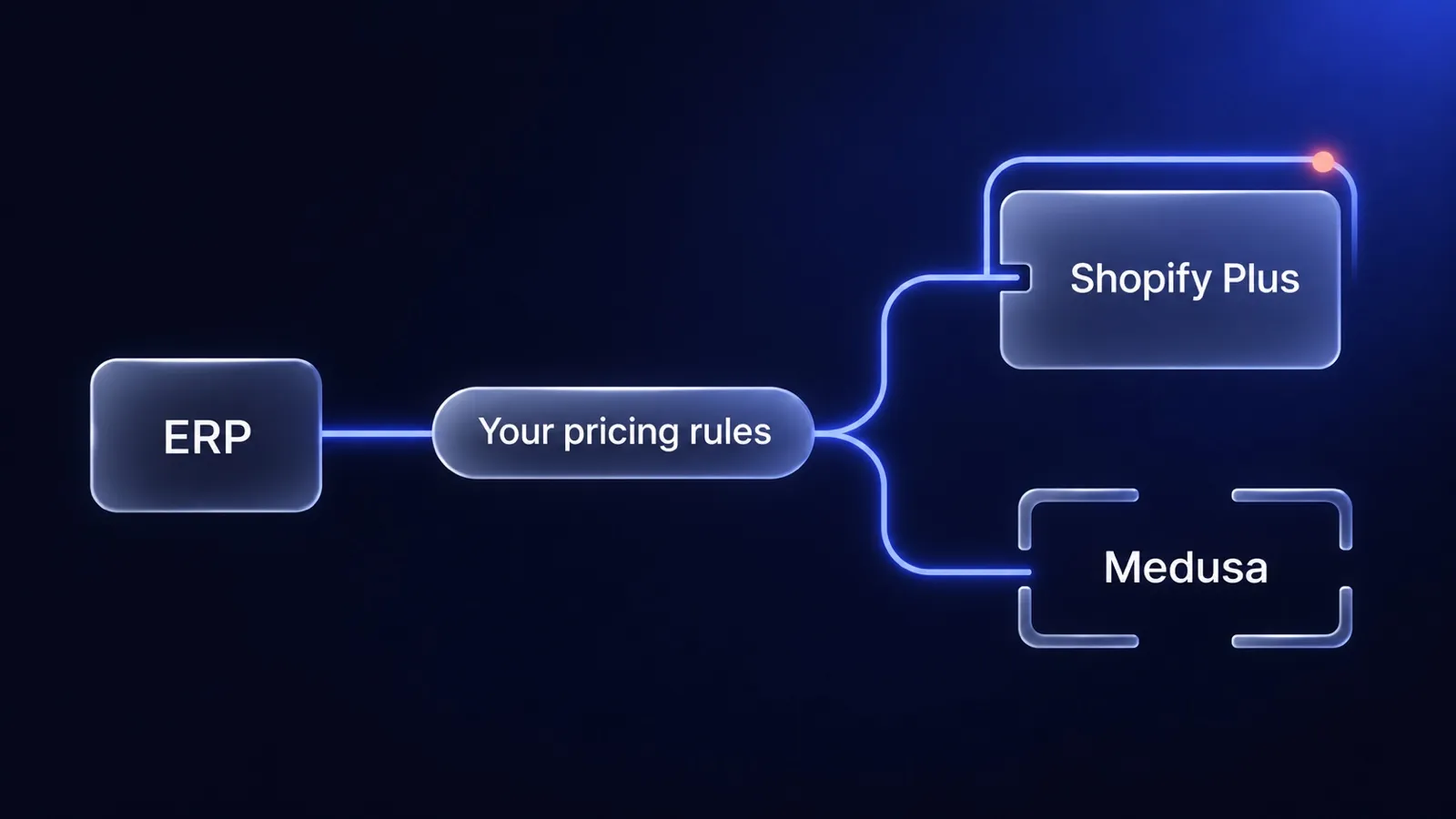
Medusa vs Shopify Plus for B2B: what Shopify B2B covers on every plan since April 2026, what only Plus adds, and when a custom Medusa store wins over 24 months.
Custom or off-the-shelf software? Calculate the cost of the whole operating model.
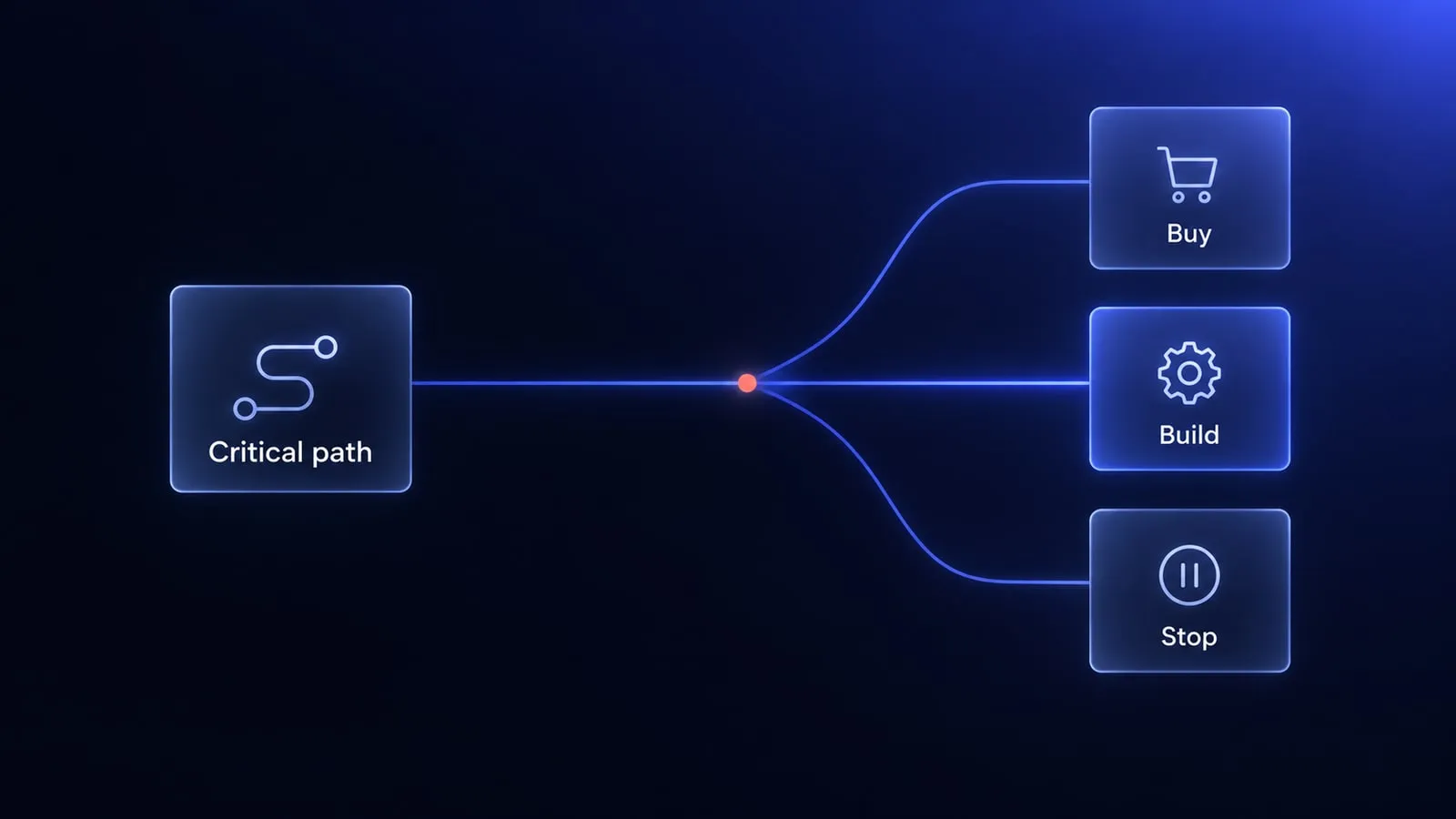
A practical custom versus off-the-shelf framework covering 24-month cost, process fit, integrations, risk and product advantage.


Questions after reading?
Tell us what the article leaves open for your company. We reply within one working day and prepare a hypothesis before any call.
A question about the article Something does not match your situation, or you want to check an assumption behind a number.
Your own problem Describe the sales process and where your current platform stops being enough.
The next step You are weighing custom, off-the-shelf or a migration and want a second opinion before you commit.