
How to choose an ecommerce platform in 2026: a ranking by scenario, the criteria and when headless fits
Platform rankings score features, but a store fails on the one process the ranking never looked at. This guide ranks the options by sales scenario, lists six criteria that decide the choice, prices two years of running cost and shows when headless commerce is worth it.

Short answer
The best ecommerce platform is the one that handles your hardest process without workarounds, not the one with the highest score in a ranking. For a standard consumer store, a SaaS platform such as Shopify or BigCommerce is usually enough. When you sell B2B with customer-specific prices, sync with an ERP or run B2B and B2C on one catalog, compare 24 months of a ready-made platform with a custom store on an open source engine such as Medusa. Headless is an architecture, not a goal: it makes sense when you need several storefronts or an unusual buying path.
What types of ecommerce platforms are there?
Ecommerce platforms fall into four types: SaaS, open source you host yourself, enterprise suites and headless engines you build your own store on. The types differ in who runs the store, how you pay and where the limits are.
| Platform type | Examples | How you pay | Who runs it | Where the limit is |
|---|---|---|---|---|
| SaaS | Shopify, BigCommerce | Subscription, payment or third-party gateway fees, apps | The vendor | Pricing logic and processes the vendor did not plan for |
| Open source, self-hosted | WooCommerce, Magento Open Source, PrestaShop | No licence fee, hosting, extensions, implementation | You or your agency | Updates and extension conflicts with every larger change |
| Enterprise suite | Adobe Commerce, Shopware, Salesforce Commerce Cloud | Licence or subscription, often tied to revenue, implementation by a partner | An implementation partner | The licence and a team that knows the platform |
| Headless engine | Medusa | No licence fee, build, hosting, maintenance | Your agency or in-house team | Everything has to be designed, nothing comes from a theme |
The type matters more than the brand. Once you decide you need a rented platform, you compare Shopify with BigCommerce on prices and apps. Once you decide you need your own logic, you compare agencies and engines. Keep those two decisions apart.
Ecommerce platforms ranked by scenario
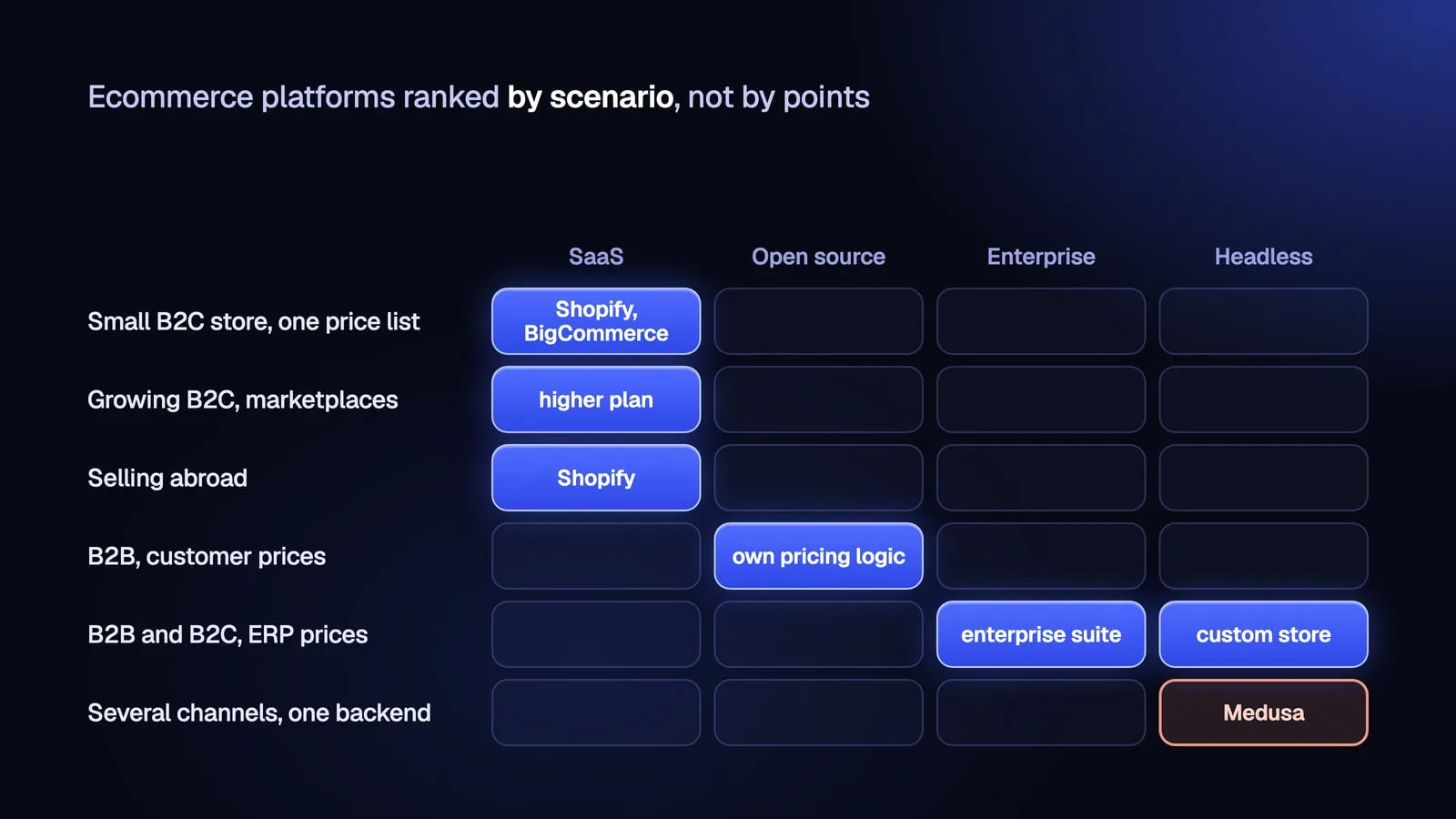
A ranking by scenario names the first choice for a typical sales situation and the point where that choice stops being enough. We do not award points, because a score without the context of your process compares features your store may never use.
| Scenario | First choice | When it stops being enough |
|---|---|---|
| Small consumer store, one price list, one market | SaaS (Shopify, BigCommerce) | When you pay for several apps that patch one process |
| Growing consumer store with marketplaces and several carriers | SaaS on a higher plan | When payment and app fees grow faster than sales |
| Selling abroad, several currencies and languages | SaaS with built-in markets (Shopify) | When your ERP, local invoicing or payment methods only connect through third-party apps |
| B2B with customer-specific prices and terms | Open source engine with your own pricing logic | Rarely: the risk is more often the team that maintains the store after launch |
| B2B and B2C on one catalog, ERP as the source of prices and stock | A custom headless store or an enterprise suite | When the enterprise licence costs more than building and running your own store |
| Several brands or channels (store, B2B portal, app) on one backend | Headless engine | When only one storefront actually runs |
The table does not replace a test on your own process, but it narrows the choice to one platform type. If your store fits two rows, pick the row with the harder process, because that process decides whether your team works in the store or around it.
Which criteria matter when choosing an ecommerce platform?
Six criteria decide the choice: your hardest process, the ERP integration, the 24-month cost, ownership of data and code, local payments and carriers, and who develops the store after launch. The feature list comes second, because every mature platform has a cart, variants and promotions.
- Your hardest process. Pick the one order that causes the most trouble today (a discount outside the price list, a split shipment, an approval on the customer’s side) and walk it through the demo of every platform, from cart to invoice.
- The ERP integration. Decide which system is the source of truth for prices, stock and customers, who maintains the connector and what happens to exceptions. We describe the scope of that work on our ecommerce integrations page, and the trade-offs in ERP and ecommerce integration.
- The 24-month cost. The subscription after any discount, payment fees, apps, implementation, hosting and your team’s time. The starting price tells you little.
- Ownership of data and code. Check that you can export products, customers and orders in full and whether the store’s code belongs to you. That decides the cost of your next migration.
- Local payments and carriers. The payment methods and carriers your customers expect in each market. On global platforms, some of them only work through third-party apps.
- Who develops the store after launch. A rented platform evolves on the vendor’s roadmap. Your own store evolves on yours, but it needs a team or a partner who stays after go-live.
What is headless ecommerce and when does it make sense?
Headless ecommerce is an architecture in which the storefront is a separate application, while products, prices, the cart and orders are handled by a backend that exposes an API. You can then develop, deploy and replace the storefront and the backend independently, and one backend can serve several storefronts.
Medusa is an example of a headless commerce engine: the Medusa deployment docs describe deploying the backend and the storefront separately, and the core is released under the MIT licence. We built Alufix on Medusa with a Next.js storefront this way. More on the engine itself in what Medusa.js is and when to build a store on it.
Headless makes sense in three situations:
- Several storefronts on one backend: a consumer store, a B2B portal for dealers, an app or a kiosk use the same products, prices and orders. We describe one such setup in a B2B customer portal for a dealer network.
- An unusual buying path: a configurator, a multi-step order with approval, or a cart a sales rep builds for the customer.
- Logic a theme cannot hold: prices calculated from the ERP in real time, customer-specific shipping rules, your own promotion rules.
Headless is the wrong choice when…
Headless is the wrong choice when you run one consumer store with a standard process, a small team without a developer and no plans for more channels. You then pay to build and run a second application, the storefront, without using the flexibility it gives you. In that case a SaaS platform with a ready-made theme is cheaper and faster to launch.
Choosing a platform for B2B: what to watch
In B2B, you choose an ecommerce platform by its price lists, trade terms and data exchange with the ERP, not by how the store looks. Ready-made platforms usually handle B2B with customer groups and paid add-ons. That works with a few buyer groups and starts to pinch when every customer has its own price list, a credit limit or an approval path.
How we build B2B stores with customer price lists, credit limits and ERP data is described on our B2B ecommerce development page. If you are weighing a custom build against an off-the-shelf product more broadly, the decision method is in custom vs off-the-shelf software.
How much does an ecommerce platform cost over 24 months?
The 24-month cost of an ecommerce platform is the subscription or licence, payment fees, apps and extensions, implementation, hosting and your team’s time. Entry prices differ by orders of magnitude, but as sales grow, the largest lines are usually fees that scale with revenue and people’s time, not the subscription.
| Platform | Entry price | What comes on top |
|---|---|---|
| Shopify | $29 to $299 a month billed yearly (source, as of 2026-10) | Fee on third-party payment providers, apps, theme and agency work |
| Shopify Plus | $2,300 a month on a 3-year term, $2,500 on a 1-year term (source, as of 2026-10) | Apps, agency work, integrations |
| BigCommerce | $29 to $299 a month billed yearly (source, as of 2026-10) | A higher plan as sales grow, apps, agency work |
| WooCommerce | No licence fee (WooCommerce pricing) | Hosting, extensions, implementation, updates |
| Shopware | Rise from €600 a month excl. VAT (source, as of 2026-10) | Implementation partner, extensions |
| Medusa (your own store) | No licence fee (MIT) | Build, hosting, maintenance |
A live store on Medusa built by Evelumo starts from €10,000 net with our live store in 30 days, and hosting with maintenance starts from €100 net a month. The full calculation with every line is in ecommerce website cost in 2026, and the Shopify side in detail in is Shopify worth it and Shopify Plus pricing. The calculator compares 24 months of Shopify with a custom store:
24-month cost: Shopify or your own store
Set your sales and plan to see which one costs less over 24 months (net amounts).
€289 a month
For example B2B apps, an ERP connector, agency hours.
- Shopify
- €71,736
- Own store
- €70,000Cheaper
Your own store costs €1,736 less over 24 months and pays back in month 21.
Shopify
- Plan
- €6,936
- Payment and Shopify fees
- €64,800
Own store
- Build
- €10,000
- Hosting and maintenance
- €2,400
- Payment provider
- €57,600
Adjust assumptionsOrders, B2B, payments, own store
Prices checked on October 7, 2026.Sources and dates
Verified on official pages
- Shopify Plus, 1-year contract: €2,250 (shopify.com, as of 2026-10-03)
- Shopify Plus, 3-year contract: €2,100 (shopify.com, as of 2026-10-03)
- Shopify Plus, expansion stores included: 9 (shopify.com, as of 2026-10-03)
- Shopify Plus, each extra store per month: €250 (shopify.com, as of 2026-10-03)
- Plus, Shopify fee for a third-party provider: 0.2% (shopify.com, as of 2026-10-03)
- Stripe, standard EEA cards: 1.5% (stripe.com, as of 2026-10-07)
- Stripe, fee per card charge: €0.25 (stripe.com, as of 2026-10-07)
- Stripe, premium EEA cards: 2.8% (stripe.com, as of 2026-10-07)
- Stripe, international cards: 3.15% (stripe.com, as of 2026-10-07)
- Evelumo, live e-commerce in 30 days, starting price (net): €10,000 (evelumo.com, as of 2026-10-03)
- Evelumo, own-store maintenance, starting rate per month (net): €100 (oferta Evelumo, 2026-10, as of 2026-10-07)
Assumptions: not published by Shopify, or not yet confirmed for this market
- Basic, monthly billing: €32 (shopify.com/at, as of 2026-10-03)
- Basic, yearly billing, per month: €24 (shopify.com/at, as of 2026-10-03)
- Grow, monthly billing: €92 (shopify.com/at, as of 2026-10-03)
- Grow, yearly billing, per month: €69 (shopify.com/at, as of 2026-10-03)
- Advanced, monthly billing: €384 (shopify.com/at, as of 2026-10-03)
- Advanced, yearly billing, per month: €289 (shopify.com/at, as of 2026-10-03)
- Basic, card rate: 2% (shopify.com/at, as of 2026-10-03)
- Basic, card fee per order: €0.25 (shopify.com/at, as of 2026-10-03)
- Grow, card rate: 1.9% (shopify.com/at, as of 2026-10-03)
- Grow, card fee per order: €0.25 (shopify.com/at, as of 2026-10-03)
- Advanced, card rate: 1.7% (shopify.com/at, as of 2026-10-03)
- Advanced, card fee per order: €0.25 (shopify.com/at, as of 2026-10-03)
- Plus, card rate: 1.5% (shopify.com/at, as of 2026-10-03)
- Plus, card fee per order: €0.25 (shopify.com/at, as of 2026-10-03)
- Basic, Shopify fee for a third-party provider: 2% (shopify.com/at, as of 2026-10-03)
- Grow, Shopify fee for a third-party provider: 1% (shopify.com/at, as of 2026-10-03)
- Advanced, Shopify fee for a third-party provider: 0.6% (shopify.com/at, as of 2026-10-03)
- Shopify Plus variable fee, D2C: 0.25% (taylorsicard.com, as of 2026-10-03)
- Shopify Plus variable fee, B2B: 0.18% (atwix.com, as of 2026-10-03)
All amounts are net of VAT and shown without exchange rates. Card rates are Shopify's standard online card rates. Other payment methods can cost more. Your own store's payment provider defaults to Stripe's published rate for standard EEA cards. The variable fee model is the partners' description, not Shopify's. Its B2B rate is applied here instead of the D2C rate. How VAT applies to Shopify's invoices is not confirmed.
When a custom store is the wrong choice
A custom store on an open source engine is the wrong choice when a ready-made platform handles your hardest process without workarounds and the 24-month cost favours the ready-made option. In practice that covers a few situations:
- you sell to consumers with one price list and have no ERP that has to drive prices;
- you are still testing whether the product sells and launching within days matters most;
- nobody will develop the store after launch and there is no budget for a partner;
- the only reason to change is how the store looks, not how it works.
In these situations we recommend a ready-made platform, even when the conversation starts with a question about a custom store.
How to choose an ecommerce platform in 3 steps
You can choose an ecommerce platform in three steps: test your hardest process, price 24 months and ask the agency three questions about maintenance. The order matters, because the first step usually rules out half the options.
- Test one process. Walk your hardest order through the demos of two or three platforms from one row of the ranking. Note what needs an app, a workaround or manual work.
- Price 24 months. For the platforms that passed the test, add the subscription after any discount, payment fees, apps, implementation and your team’s time. Compare the same scope.
- Ask three questions. Who maintains the ERP integration and what happens to exceptions? Do we own the code and the data, and how do we export them? Who develops the store after launch, and what does that cost per month?
If the answer is a custom store, see how a Medusa build works, and if you are leaving your current platform, start with ecommerce migration.
Frequently asked questions
What is the best ecommerce platform for a small business?
For a small business selling to consumers with one price list, a SaaS platform such as Shopify or BigCommerce is usually the best choice. You pay no build cost, the vendor runs hosting, updates and security, and the store can go live within days. Compare the price after any first-year discount, the payment fees and the apps you will need, because those decide the bill after two years, not the starting plan.
What is the difference between SaaS and open source ecommerce platforms?
A SaaS platform is a store you rent: the vendor runs servers, updates and security, and you work within the features it provides. An open source platform such as WooCommerce or Magento Open Source has no licence fee, but hosting, updates, extensions and security patches are on you or your agency. SaaS means less work, open source means more control over the code.
What is headless ecommerce?
Headless ecommerce is an architecture in which the storefront customers see is a separate application, while products, prices, the cart and orders run in a backend that exposes an API. One backend can then serve several storefronts, for example a consumer store, a B2B portal and an app. Medusa is an example of a headless commerce engine, often paired with a Next.js storefront.
Is headless ecommerce more expensive than a regular store?
Usually yes at the start, because the storefront is a separate application that has to be designed, built, hosted and maintained. Headless pays off when it handles something a theme-based store cannot without workarounds: several storefronts on one backend, an unusual buying path or pricing logic driven by an ERP. With one standard consumer store you pay for flexibility you will not use.
Which ecommerce platform should I choose for B2B and B2C at the same time?
Choose one that keeps a single product catalog and separates prices, payments and shipping by channel and by customer. Ready-made platforms usually do this with customer groups and B2B add-ons, which is enough for a few buyer groups. When every wholesale customer has its own price list from the ERP, a credit limit or an approval path, price 24 months of the ready-made platform with its add-ons against a custom store on an open source engine.
Keep reading
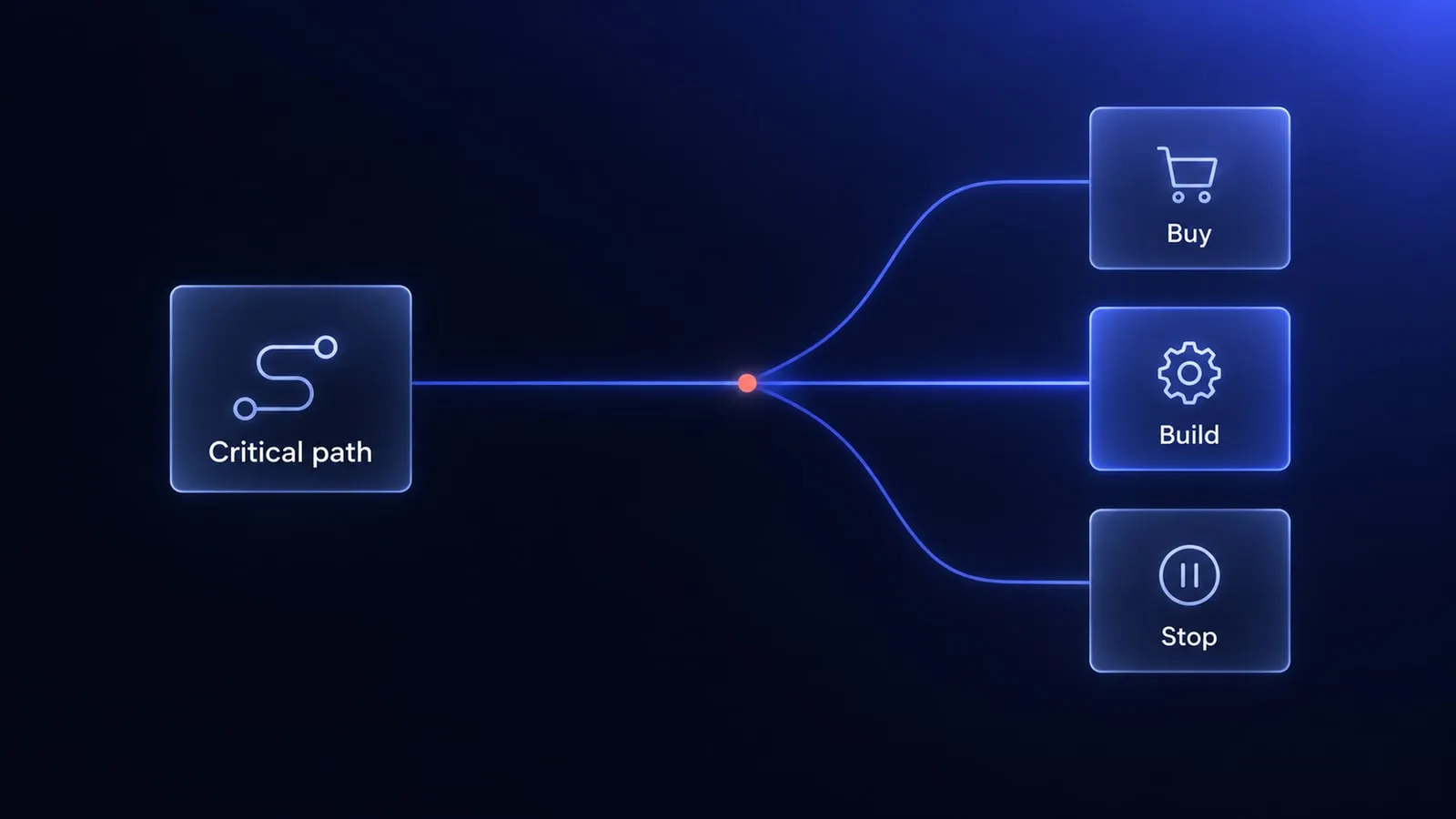
Custom or off-the-shelf software? Calculate the cost of the whole operating model.
A practical custom versus off-the-shelf framework covering 24-month cost, process fit, integrations, risk and product advantage.
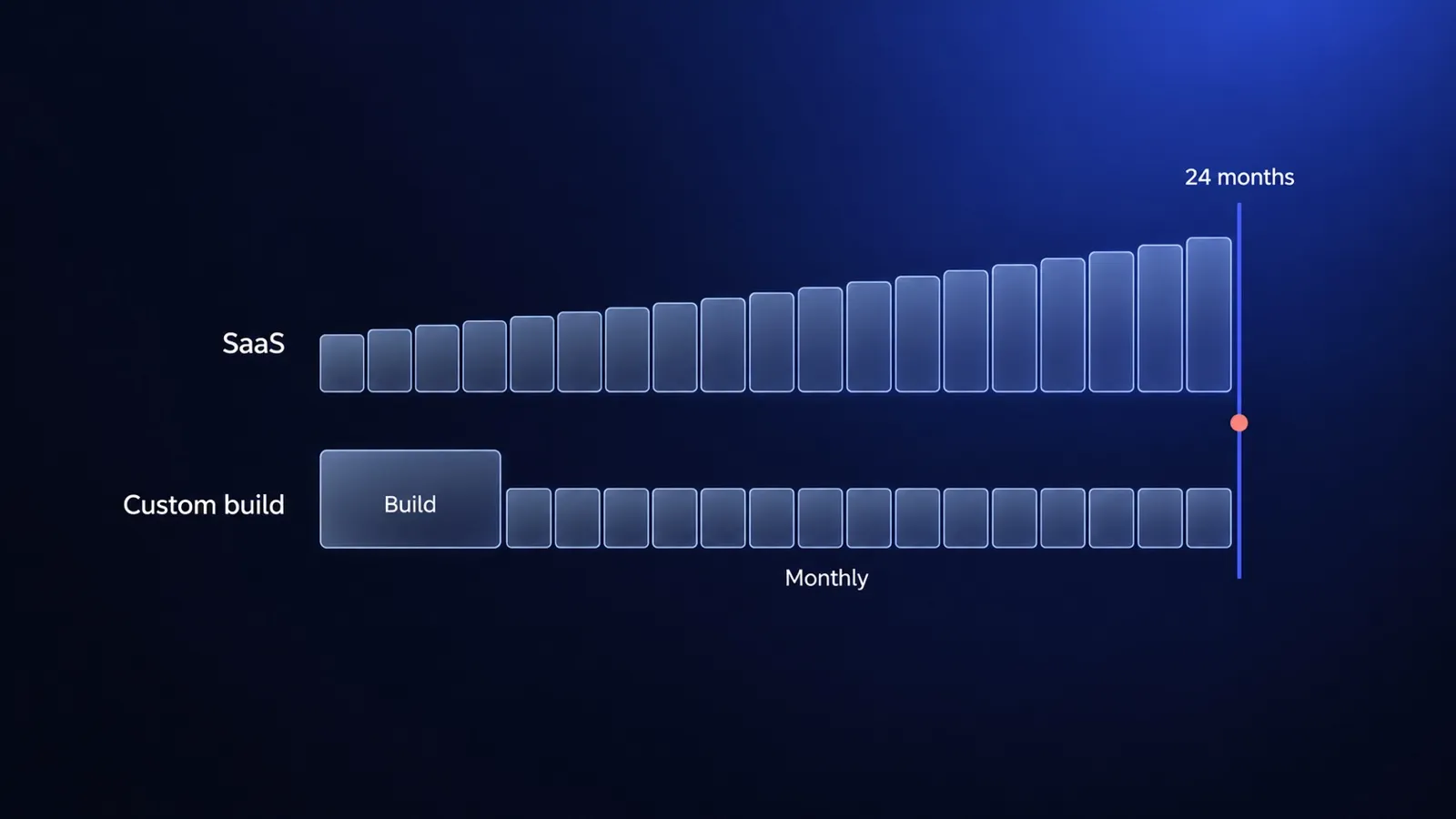
Ecommerce website cost in 2026: SaaS vs custom build, with real numbers
Ecommerce website cost in 2026, using published prices only: Shopify, BigCommerce and a custom build on Medusa compared over 24 months on the same scope.
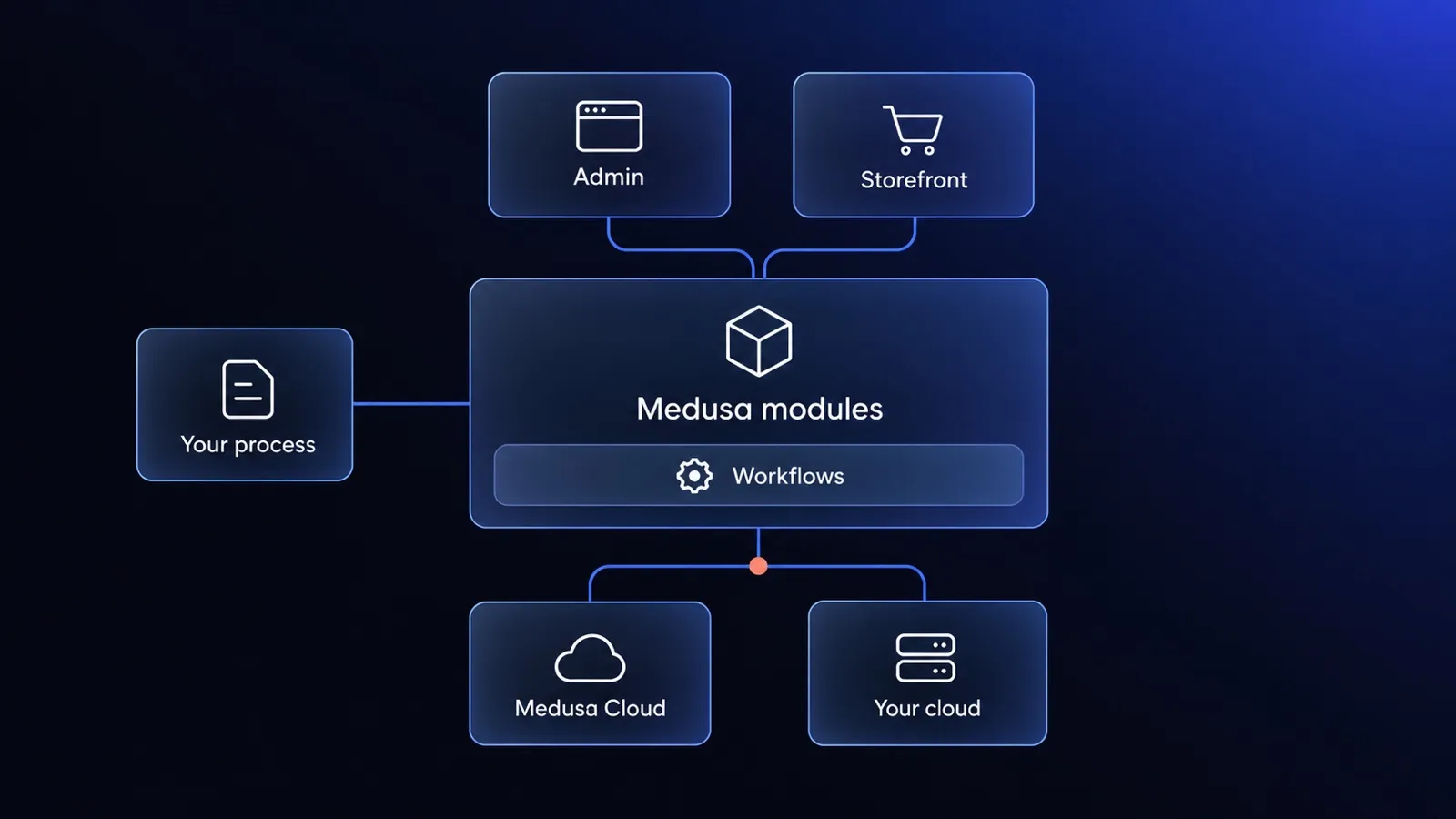
What is Medusa.js? A guide for decision makers (v2, hosting, cost)
Medusa.js is an open-source commerce engine you build your store on. What v2 is, Medusa Cloud vs your own hosting, what it costs and when to skip it.


Questions after reading?
Tell us what the article leaves open for your company. We reply within one working day and prepare a hypothesis before any call.
A question about the article Something does not match your situation, or you want to check an assumption behind a number.
Your own problem Describe the sales process and where your current platform stops being enough.
The next step You are weighing custom, off-the-shelf or a migration and want a second opinion before you commit.